The Eternal Rebellion Against Those Who Know
Long before Facebook groups became centers of amateur epidemiology and YouTube universities granted honorary degrees in constitutional law, ordinary people were telling credentialed experts exactly where they could file their fancy degrees. The language changes — "do your own research" is simply the latest iteration of "common sense beats book learning" — but the underlying psychology remains identical across centuries.
What we're witnessing isn't a uniquely modern breakdown of institutional trust. It's the latest chapter in humanity's oldest recurring drama: the periodic revolt of the governed against those who claim special knowledge about how they should be governed.
When Priests Became the Problem
The Protestant Reformation wasn't just a theological dispute — it was history's most successful anti-expert movement. For over a thousand years, Catholic clergy had maintained exclusive authority to interpret scripture and mediate between God and humanity. They possessed the education, the training, and the institutional backing that made their expertise unquestionable.
Then Martin Luther declared that individual believers could read the Bible themselves and reach their own conclusions about salvation. The experts — with their Latin texts and theological sophistication — weren't just wrong. They were corrupt gatekeepers preventing ordinary people from accessing truth directly.
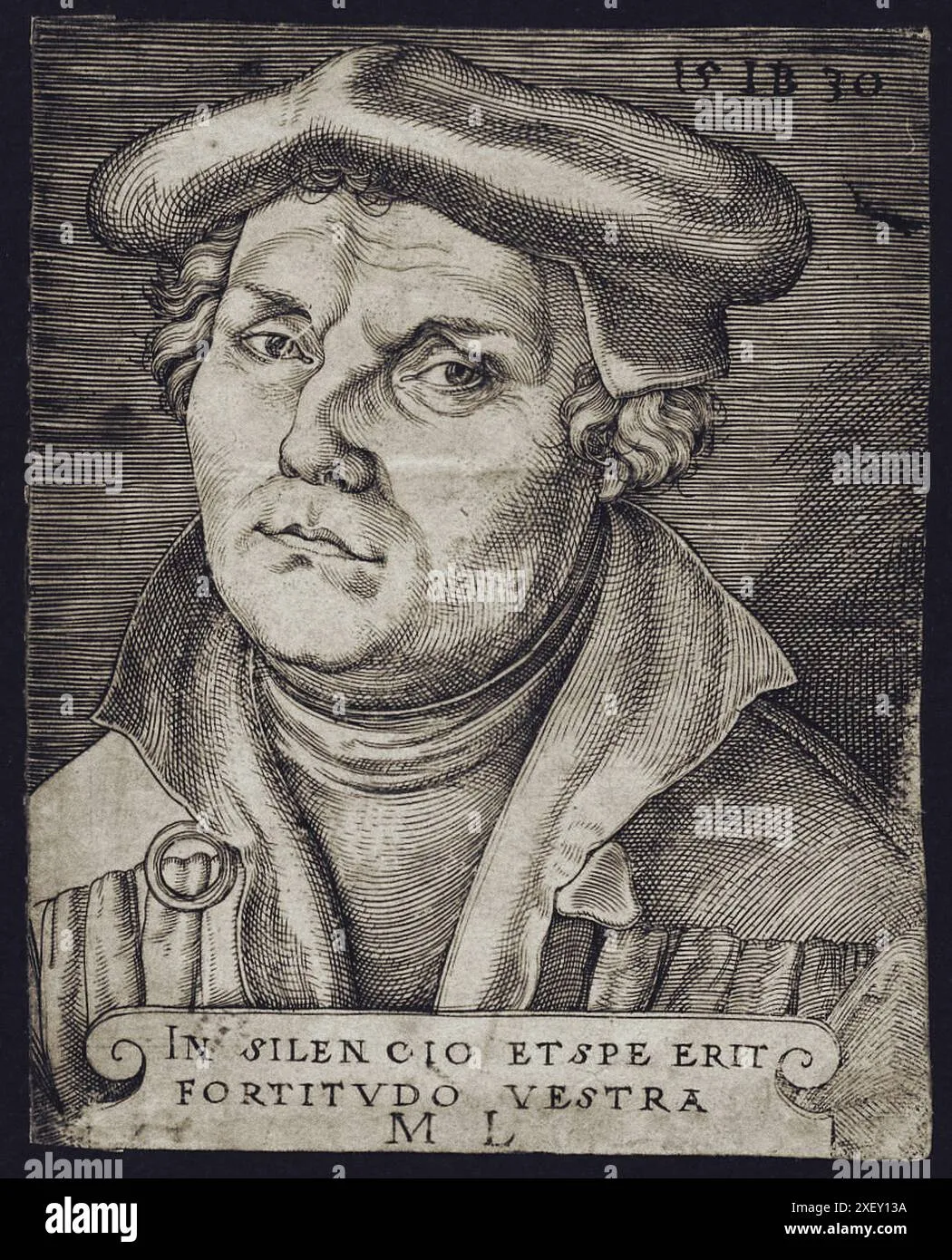 Photo: Martin Luther, via c8.alamy.com
The parallels to contemporary anti-expert sentiment are striking. Luther's followers didn't reject expertise because they were ignorant. They rejected it because they believed the experts were using their credentials to maintain power rather than serve truth. Sound familiar?
The Medical Establishment's Original Sin
Eighteenth-century physicians faced their own credibility crisis that mirrors today's medical skepticism with eerie precision. Trained doctors relied on bloodletting, mercury treatments, and other interventions that often killed patients faster than the diseases they claimed to cure. Meanwhile, folk healers and herbalists frequently achieved better outcomes using methods the medical establishment dismissed as superstition.
When George Washington's physicians bled him to death while treating a throat infection, the public drew the obvious conclusion: expert knowledge was not just useless but actively dangerous. The rise of alternative medicine movements in early America wasn't anti-science — it was anti-expert, driven by observable evidence that credentialed professionals were failing at their most basic responsibilities.
This historical pattern explains why modern vaccine hesitancy often comes from parents who witnessed medical experts change their recommendations repeatedly, admit to past errors, and acknowledge institutional failures. The specific grievances evolve, but the underlying logic remains constant: if the experts have been wrong before, why trust them now?
The Economic Wizards Who Couldn't See Tomorrow
Every major economic crisis produces the same cycle. Professional economists, armed with sophisticated models and prestigious credentials, assure the public that they understand how markets work and can predict future trends. Then reality intervenes, their predictions prove spectacularly wrong, and ordinary citizens conclude that expertise is just educated guessing dressed up in mathematical formulas.
The 1929 crash discredited an entire generation of economic experts who had proclaimed that boom-and-bust cycles were obsolete. The stagflation of the 1970s demolished Keynesian orthodoxy and the economists who insisted that unemployment and inflation couldn't rise simultaneously. The 2008 financial crisis destroyed faith in risk management models and the regulatory experts who had blessed them as foolproof.
Each crisis follows an identical script: experts explain why their failures were unpredictable, promise that new expertise will prevent future disasters, and express bewilderment when the public remains skeptical. Meanwhile, ordinary citizens notice that the economists who failed to predict the last crisis are the same ones claiming to understand the next one.
The Legal Profession's Credibility Problem
American anti-lawyer sentiment isn't a modern phenomenon — it's as old as the profession itself. Colonial Americans viewed lawyers as parasitic middlemen who complicated simple disputes and enriched themselves through deliberately obscure procedures. This wasn't ignorant prejudice; it was rational observation of how legal expertise actually functioned in practice.
When ordinary citizens watch lawyers manipulate procedural technicalities to achieve outcomes that violate common sense notions of justice, they don't conclude that the law is too complex for them to understand. They conclude that legal expertise is designed to benefit experts rather than serve justice.
This dynamic explains why every populist movement in American history has targeted the legal establishment alongside political elites. The problem isn't that lawyers know too little — it's that they appear to know exactly how to game a system that ordinary people must navigate without professional help.
The Digital Revolution's False Promise
The internet was supposed to democratize information and make expertise more accessible. Instead, it created the conditions for the most dramatic anti-expert revolt in modern history. When anyone can access the same research papers, government databases, and primary sources that experts use, the mystique of professional knowledge evaporates.
Social media didn't create anti-expert sentiment — it revealed how shallow the foundations of expert authority had always been. When epidemiologists changed their recommendations about masks, lockdowns, and transmission routes, they weren't adapting to new evidence as scientific method requires. In the public mind, they were admitting that their initial expertise was guesswork.
The "do your own research" phenomenon isn't anti-intellectual — it's the logical response to discovering that expert knowledge is often provisional, contradictory, and influenced by non-scientific considerations. Why defer to authorities who admit they're still figuring things out?
The Cycle Completes Itself
Here's the historical pattern that never changes: institutional failures erode expert credibility, anti-expert movements fill the vacuum with alternative authorities, and then the consequences of ignoring legitimate expertise create new crises that demand expert intervention.
The Protestant Reformation produced religious wars that lasted for centuries. Medical populism enabled quack treatments that killed millions. Economic anti-expertism contributed to policy disasters that prolonged depressions. Legal skepticism undermined rule of law and enabled authoritarian overreach.
Eventually, the costs of rejecting expertise become so obvious that societies rebuild institutional authority — until the next generation of experts fails badly enough to restart the cycle.
The Experts' Eternal Dilemma
Professional expertise faces an impossible challenge: it must be simultaneously humble enough to acknowledge uncertainty and confident enough to justify authority. Admit too much uncertainty, and the public concludes that expertise is worthless. Claim too much certainty, and inevitable failures destroy credibility permanently.
This dilemma explains why expert institutions alternate between arrogance and defensiveness, often within the same crisis. They need public deference to function effectively, but that deference must be earned through performance that meets unrealistic expectations of infallibility.
The Historical Verdict
Every society needs expertise to function, but no society has solved the problem of how to maintain expert authority without expert failure. The current anti-expert revolt isn't a cultural breakdown — it's a regularly scheduled event that occurs whenever the gap between expert claims and expert performance becomes too obvious to ignore.
The real question isn't why people reject expertise. It's why anyone expected expert institutions to maintain permanent authority when they're run by humans who make human mistakes with superhuman consequences. History suggests that expertise, like democracy, is the worst system except for all the others — and like democracy, it only works when everyone involved remembers how badly it can fail.