The Permanent Conspiracy: Seven Moments America Convinced Itself That Unelected Insiders Were Running Everything
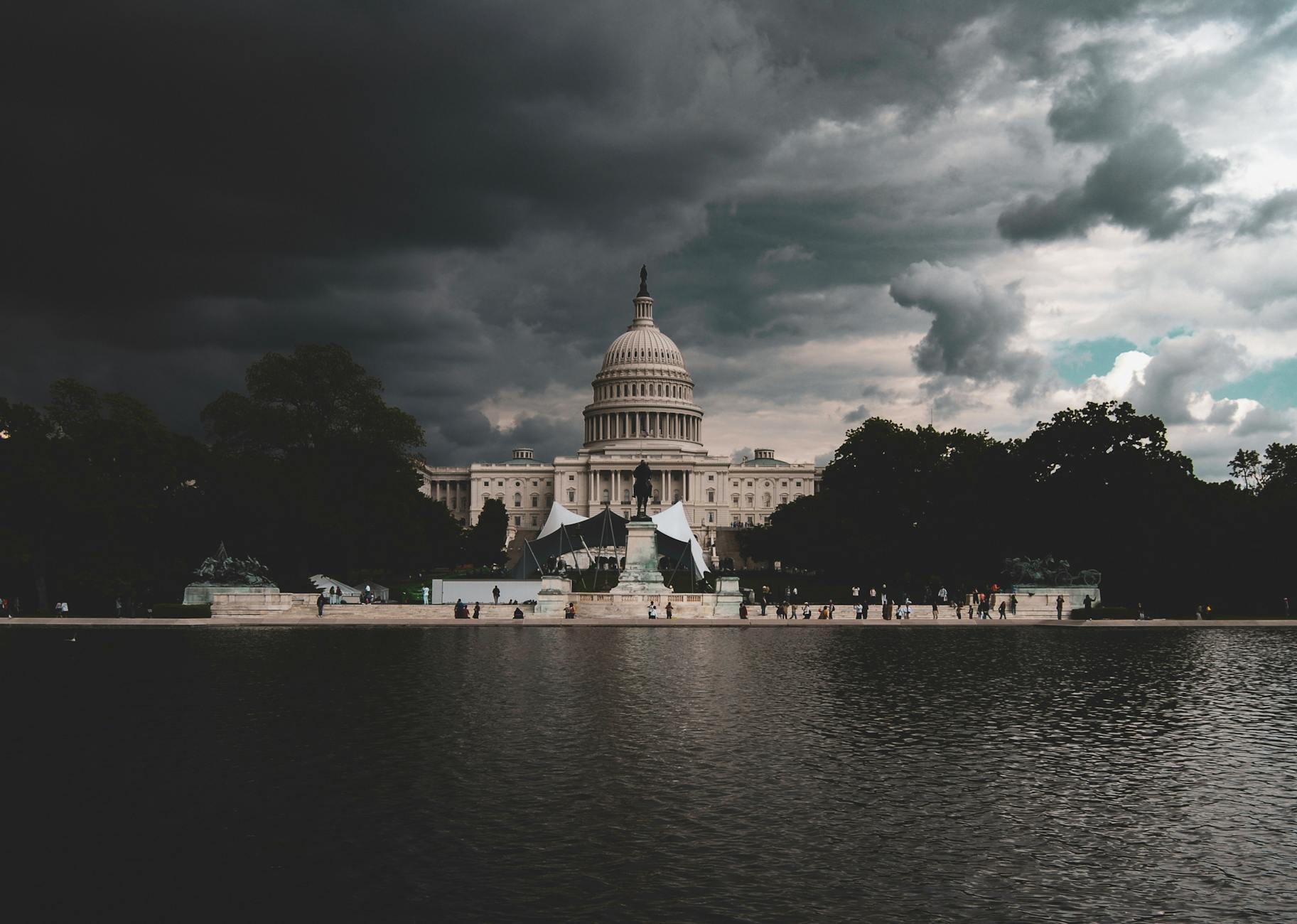
The Permanent Conspiracy: Seven Moments America Convinced Itself That Unelected Insiders Were Running Everything
America has a recurring dream. In it, the government the people elected is not really the government. The real government is somewhere else — in a bank boardroom, a federal agency, a shadowy network of career officials who outlast every election and answer to no one. The dream recurs roughly once a generation, always in slightly different costume, always producing roughly similar results.
What follows is not an argument that the deep state is real or that it is imaginary. It is something more interesting: a record of what the fear produces, who profits from it, and why it keeps coming back regardless of which party is in power or what the underlying facts actually are.
1. Andrew Jackson and the Monster Bank (1832)
Andrew Jackson did not invent populist suspicion of financial elites, but he industrialized it. His war against the Second Bank of the United States was waged on the explicit premise that a privately controlled institution with public powers represented a corrupt aristocracy operating outside democratic accountability. "The bank is trying to kill me," Jackson reportedly said, "but I will kill it."
The Second Bank had genuine problems. It was also, by most economic assessments, a stabilizing force. Jackson vetoed its recharter anyway, withdrew federal deposits, and distributed them among state banks — a decision that contributed to the Panic of 1837, one of the worst economic contractions of the nineteenth century. The monster was slain. The economy collapsed shortly afterward.
Who benefited: Jackson's political coalition, which had run explicitly against moneyed Eastern interests. State banks, briefly, until the panic.
What actually happened: The absence of a central banking function created the very instability the Second Bank had been designed to prevent.
2. The Mugwumps and the Spoils System (1880s)
The late nineteenth century produced a different version of the same anxiety, running in the opposite direction. The reformers known as Mugwumps were terrified not of an entrenched bureaucracy but of its absence — of a federal government staffed entirely by political loyalists who owed their positions to party machines rather than competence. Their fear was that the unelected class was too easily controlled by elected ones.
The Pendleton Civil Service Reform Act of 1883 created a merit-based federal workforce. It was, in a real sense, the legislative origin of what later generations would call the deep state: a professional bureaucracy deliberately insulated from electoral politics.
Who benefited: Reformers, good-government advocates, and ultimately the federal capacity to administer a modern industrial nation.
What actually happened: The civil service grew. Later generations would come to regard its insulation from politics as the problem rather than the solution.
3. The Red Scare, Version One (1919-1920)
Following World War One and the Russian Revolution, Attorney General A. Mitchell Palmer oversaw a sweeping campaign of raids, deportations, and arrests targeting suspected anarchists and communists. The Palmer Raids were premised on the existence of a hidden revolutionary network embedded in American institutions — labor unions, immigrant communities, left-wing political organizations.
The network was largely imaginary at the scale Palmer claimed. The raids resulted in thousands of arrests and hundreds of deportations, most of them legally dubious. The predicted insurrection did not materialize. Palmer's political career did not survive the embarrassment.
Who benefited: Palmer, briefly, before the hysteria collapsed. Employers who used the Red Scare to break unions.
What actually happened: A significant curtailment of civil liberties, followed by a rapid deflation of the panic once the predicted revolution failed to arrive.
4. The Business Plot (1933-1934)
This one is less well remembered, and runs against the usual political grain. In 1934, Marine General Smedley Butler testified before Congress that a group of wealthy businessmen had approached him to lead a fascist coup against Franklin Roosevelt's administration. The alleged conspirators believed that New Deal bureaucrats — unelected administrators wielding unprecedented economic power — represented an existential threat to American capitalism.
The congressional committee that investigated found the core allegations credible. No prosecutions followed. The plotters were prominent enough that accountability was apparently inconvenient.
Who benefited: Roosevelt, who used the episode to discredit opposition to the New Deal.
What actually happened: Remarkably little, given the gravity of the allegations.
5. McCarthyism and the Communist Infiltration Panic (1950-1954)
Joseph McCarthy's genius was not the discovery of communist infiltration in the federal government. It was the discovery that the accusation was essentially unfalsifiable. Demanding that an accused person prove they were not a communist agent placed the burden of proof in a location where it could never be fully discharged.
The State Department, the Army, Hollywood, and the academy were all alleged to harbor networks of subversives whose loyalty ran to Moscow rather than Washington. Some Soviet espionage was real — the Venona decrypts later confirmed genuine penetration of certain agencies. The scale McCarthy claimed was not.
Who benefited: McCarthy, until he overreached with the Army hearings. Republicans who used the issue to batter the Truman administration.
What actually happened: Hundreds of careers destroyed, a chilling effect on political speech that lasted a generation, and an eventual censure that ended McCarthy's influence without producing a single espionage conviction.
6. The Imperial Presidency and the CIA Investigations (1975)
The Church Committee investigations of 1975 produced something unusual in this catalog: documented evidence that the feared hidden government was, in significant respects, real. The CIA had conducted domestic surveillance, plotted foreign assassinations, and operated programs — COINTELPRO among them — explicitly designed to subvert domestic political movements.
The fear, in this instance, had legitimate empirical grounding. The response — new oversight frameworks, the Foreign Intelligence Surveillance Act, inspector general structures — represented a genuine attempt to bring unaccountable power under democratic control.
Who benefited: Civil libertarians, congressional oversight advocates, and ultimately the credibility of the oversight framework itself.
What actually happened: Meaningful reform, followed over subsequent decades by a gradual re-expansion of the same powers under the pressure of new security crises.
7. The Administrative State and the Bureaucracy Wars (2016-Present)
The current iteration of this anxiety targets the federal civil service itself — the professional workforce created by the Pendleton Act — as an ideologically captured entity resistant to democratic direction. The language of the "deep state" entered mainstream political discourse around 2017 and has not left.
The concern has a legitimate constitutional dimension: an unelected workforce of two million people exercising significant discretionary authority does raise genuine questions about democratic accountability. It also has a political dimension that is considerably less principled: the bureaucracy tends to be characterized as illegitimate primarily by whichever party is not currently directing it.
Who benefited: Political movements seeking to consolidate executive authority and reduce regulatory capacity.
What actually happened: We are still inside this moment. History has not yet rendered its verdict.
The Pattern Underneath the Pattern
Laid end to end, these seven episodes suggest something that cuts across partisan lines and ideological categories. The fear of unaccountable insider power is not always wrong. The Church Committee findings were real. Some degree of bureaucratic capture is a genuine phenomenon in any large organization. The Second Bank did concentrate financial power in ways that warranted scrutiny.
But the fear is also, and perhaps primarily, a political instrument. It is most loudly voiced when it is most useful, not necessarily when the underlying threat is most acute. It tends to identify villains at the precise level of abstraction that makes them impossible to fully exonerate and politically useful to attack.
Human beings have a deep appetite for the explanation that attributes collective misfortune to a coherent, intentional enemy. That appetite does not require a conspiracy to feed it. It requires only a politician willing to supply one.