The Founders' Fake News: Why American Journalism Was Born Biased and Stayed That Way
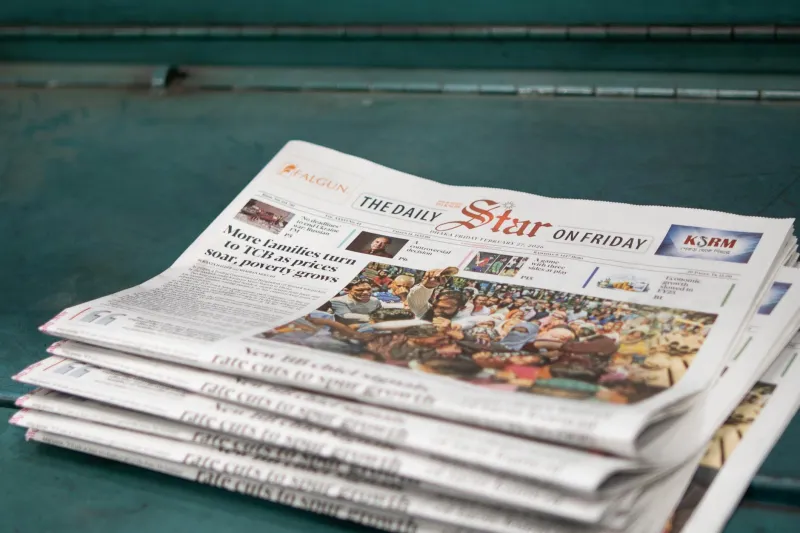
The Forty-Year Mirage
Every election cycle brings fresh lamentations about the death of objective journalism, as if somewhere in America's past existed a pristine era when reporters simply reported facts without interpretation or agenda. This mythical golden age, according to the collective memory, stretched from the responsible coverage of World War II through the dignified reporting of the Kennedy administration, only to collapse under the weight of Vietnam cynicism and Watergate paranoia.
The historical record tells a different story. American journalism's brief flirtation with objectivity lasted roughly from 1920 to 1960—a commercial innovation, not a democratic ideal. Before that forty-year experiment, and increasingly after it, the American press operated exactly as the Founders intended: as a cacophony of competing voices, each advancing particular interests and viewpoints.
Hamilton's Propaganda Machine
Alexander Hamilton didn't just tolerate partisan journalism; he invented the American version of it. In 1789, he secretly funded John Fenno's Gazette of the United States to advance Federalist policies. Thomas Jefferson, not to be outdone, bankrolled Philip Freneau's National Gazette to promote Democratic-Republican positions. Both men understood what modern media critics seem to have forgotten: in a republic, the press serves democracy best when different outlets openly advocate for competing visions of governance.
The Founders never expected neutral journalism because they never believed neutral politics existed. James Madison's Federalist No. 10 explicitly acknowledges that faction and self-interest drive human behavior. The solution wasn't to eliminate bias—an impossible task—but to ensure that multiple biases could compete in the marketplace of ideas.
The Commercial Accident of Objectivity
The myth of objective journalism emerged from economic necessity, not democratic theory. As newspapers consolidated in the early twentieth century, publishers discovered they could maximize advertising revenue by appealing to the broadest possible audience. Partisan papers limited their market; neutral ones could sell to everyone.
This commercial logic produced the stylistic conventions Americans now mistake for journalistic virtue: the inverted pyramid structure, the separation of news from opinion, the fetishization of "both sides" reporting. These weren't moral imperatives but business strategies designed to offend the fewest potential customers.
The system worked reasonably well when three television networks and a handful of national newspapers controlled information distribution. Scarcity forced moderation. When everyone had to share the same limited channels, extreme positions became commercially unviable.
The Return of the Founders' Vision
The internet didn't break American journalism; it restored it to its natural state. Digital distribution eliminated the scarcity that made objectivity profitable. When anyone can publish and audiences can self-select their information sources, the economic incentives that briefly supported neutral journalism disappear.
Today's media landscape—with its openly partisan outlets, its ideologically segregated audiences, and its competing versions of basic facts—looks remarkably similar to the newspaper environment of 1790 or 1850 or 1910. The difference isn't the bias; it's the speed of distribution and the granularity of targeting.
The Real Historical Pattern
History suggests that press partisanship correlates with democratic vitality, not its decline. The most partisan eras in American journalism—the 1790s, the 1850s, the 1930s—coincided with periods of intense democratic engagement and significant policy innovation. The most "objective" period—the 1950s—produced the conformity and complacency that eventually exploded in the upheavals of the 1960s.
The pattern makes intuitive sense. When journalists openly declare their positions, readers can adjust for bias. When outlets pretend to neutrality while advancing particular agendas—as mainstream media increasingly did from the 1970s onward—audiences feel deceived and trust erodes.
The Wrong Question
The current panic about media bias asks the wrong historical question. The relevant inquiry isn't whether journalists are biased—they always have been—but whether they remain adversarial to power regardless of which party holds it.
Here the historical record offers genuine cause for concern. Partisan journalism served democracy when competing outlets held different parties accountable. The problem emerges when media bias aligns too closely with institutional power, creating what amounts to state media by market forces rather than government decree.
The Founders' system assumed that partisan outlets would proliferate across the political spectrum, ensuring that no faction could control information entirely. When media consolidation or audience self-selection breaks this assumption, the democratic benefits of partisan journalism disappear while the costs remain.
The Long Game of Information
American democracy survived and thrived for its first 130 years with an openly partisan press. The brief experiment in objectivity produced some excellent journalism but also some spectacular failures—from the uncritical reporting that enabled McCarthyism to the credulous coverage that sold the Iraq War.
The return to partisan journalism isn't a bug in the American system; it's a feature. The challenge isn't to restore an objectivity that never really existed, but to ensure that partisanship serves democratic accountability rather than tribal loyalty. That requires not neutral journalists, but adversarial ones—reporters willing to challenge power regardless of which party wields it.
The Founders designed American institutions assuming that ambitious people would pursue their own interests. They never expected angels to govern, and they shouldn't have expected angels to report on governance either. The system works when competing self-interests check each other, not when everyone pretends they don't have interests at all.