The Reluctant Architect: Why America's Most Powerful Officials Never Campaigned for the Job
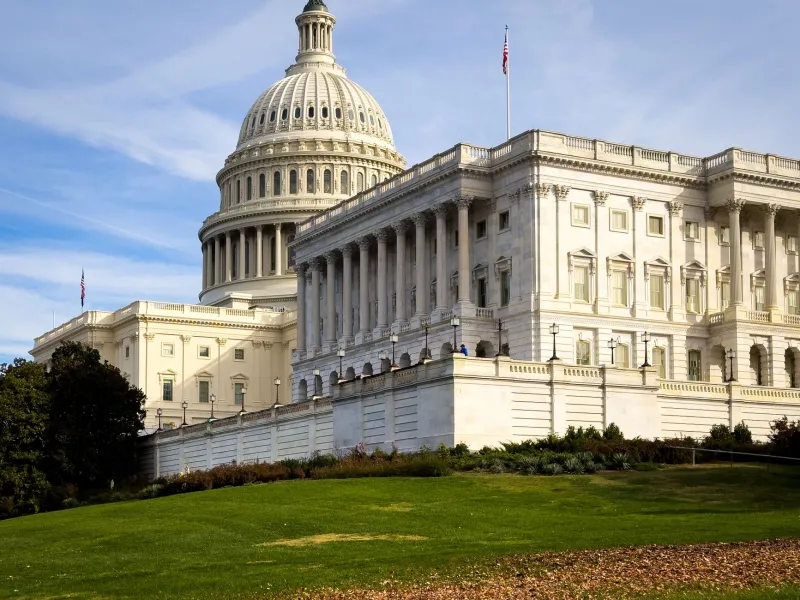
There is a story Americans have told themselves about power for as long as the republic has existed. It goes roughly like this: the best leaders are the ones who never wanted the job. The man who must be dragged from his farm, his law practice, or his military post to serve the public good is, by virtue of his reluctance, more trustworthy than the one who spent a decade engineering his own ascent. It is a flattering story. It is also, like most flattering stories, worth examining with some skepticism.
And yet the pattern itself is undeniable. Some of the most transformative figures in American institutional history arrived at their defining roles through routes that conspicuously bypassed personal ambition.
The Sherman Problem
William Tecumseh Sherman is perhaps the purest case. His 1884 declaration — "I will not accept if nominated and will not serve if elected" — has become the canonical expression of American political reluctance, so famous it has its own name: a Shermanesque refusal. But Sherman's disinterest in the presidency was not merely rhetorical theater. He had watched his friend Ulysses Grant spend eight years being slowly consumed by an office that rewarded political instincts Sherman knew he didn't possess.
What Sherman understood, and what most ambitious men in his position would have suppressed, was the difference between the kind of authority he was good at exercising and the kind the presidency actually required. His reluctance was, in other words, a form of self-knowledge. That is rare. And it is precisely what made him effective in the roles he did accept — roles where his particular gifts for systemic, long-horizon thinking could operate without the constant friction of electoral accountability.
Human psychology has not changed since Sherman's era. The person who accurately perceives the gap between their skills and a role's demands, and says so plainly, is always the exception. The historical record is littered with confident men who had no such perception and sought every office within reach. We remember Sherman partly because he was so unusual.
Kissinger and the Architecture of Reluctance
Henry Kissinger presents a more complicated case, and therefore a more instructive one. His path to the National Security Advisor post under Nixon involved years of careful positioning within the foreign policy establishment — consulting, writing, cultivating relationships across party lines. He was, by any honest accounting, a man who had arranged himself to be available for exactly the kind of appointment he eventually received.
And yet his public presentation consistently emphasized the contingent, almost accidental quality of his rise. He had not run for anything. He had not built a political machine. He had simply been, as he might have put it, useful.
This distinction matters because it reveals something important about how American institutions legitimate certain kinds of power. The appointed official — the cabinet secretary, the national security advisor, the Fed chairman — operates under a different set of expectations than the elected one. Voters did not choose them. They are therefore, in theory, accountable to a different standard: expertise, judgment, the confidence of those who did choose them. The narrative of reluctance reinforces this legitimacy. It says: this person is here because they were needed, not because they wanted to be here.
Whether that narrative is true in any given case is almost beside the point. Its function is structural.
The Recurring Logic of the Dragged-In Expert
The pattern extends well beyond these two figures. Robert Gates, asked to return to government service after a career he had ostensibly concluded, accepted the Defense Secretary position under George W. Bush and stayed on under Barack Obama — a continuity that would have been politically impossible for any elected official. His value to both administrations derived partly from his perceived distance from partisan ambition. He had nothing to prove and nowhere he needed to be.
George Marshall, whose opposition to a political career was so well known that Franklin Roosevelt reportedly worried about asking him to take on roles that might expose him to political pressure, became the architect of postwar European reconstruction precisely because his motives were considered beyond question.
The Federal Reserve offers perhaps the most institutionalized version of this logic. The entire design of the Fed assumes that monetary policy should be insulated from the ambitions of elected officials. The chairman is appointed, not elected; serves a fixed term that deliberately misaligns with presidential cycles; and is expected to make decisions that are, by design, unpopular with whoever currently holds power. The institutional reluctance is baked into the architecture.
What the Pattern Actually Reveals
There are two ways to read this history, and they are not mutually exclusive.
The first reading is that reluctance genuinely correlates with a certain kind of effectiveness. The person who did not spend years fighting for a position has not accumulated the debts — to donors, to factions, to the various coalitions that must be assembled to win anything — that constrain the person who did. They arrive with a cleaner slate. They can, in theory, exercise judgment that their more ambitious colleagues cannot afford.
The second reading is more cynical, and probably more accurate as a description of the selection process rather than the outcome. Institutions and executives often prefer appointees who appear reluctant because reluctance signals controllability. The person who desperately wanted the job is the person who might use it to build a competing power base. The person who had to be persuaded is the person who, presumably, can be persuaded again — to stay within lanes, to defer on questions outside their portfolio, to leave gracefully when asked.
These two readings converge on an uncomfortable conclusion: the appearance of reluctance is a form of political currency, whether it reflects genuine disinterest or has been carefully cultivated. The historical record cannot always tell us which is which. Human beings are not reliable narrators of their own motivations, and the most sophisticated actors in any era have always understood that the story you tell about how you came to power is itself a form of power.
The Long Reckoning
What five thousand years of recorded human behavior suggests is this: the psychology of ambition has not changed, but the costumes it wears have shifted with each era's particular anxieties. In a republic that has always been suspicious of concentrated power, the costume of reluctance has remarkable staying power.
This does not mean that every reluctant official is secretly a schemer, or that every dragged-in expert was merely performing disinterest. Some of them were exactly what they appeared to be. Sherman probably was. Marshall almost certainly was.
But the pattern itself — the institutional preference for officials who can plausibly claim they never asked for the job — tells us something important about where American governance locates its legitimacy. Not in the will of the ambitious, but in the judgment of the conscripted. Whether that distinction holds up under scrutiny in any particular case is the question the historical record keeps posing, and keeps declining to answer simply.