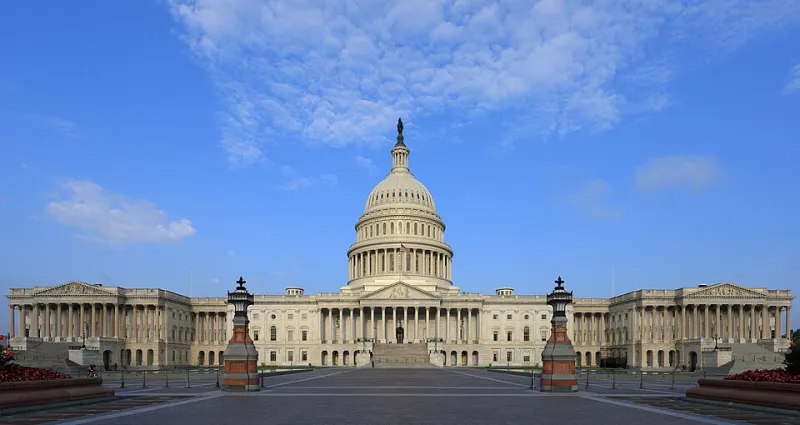
The Eternal Third Party: America's Recurring Dream of Breaking the Duopoly

The Cyclical Prophecy
Somewhere in America right now, earnest activists are meeting in coffee shops and community centers, convinced they have discovered the formula for shattering the two-party stranglehold. They point to polling data showing widespread dissatisfaction with both major parties. They cite technological innovations that will revolutionize political organizing. They invoke the Founding Fathers' warnings about faction and partisanship.
They are repeating, almost word for word, conversations that have occurred in every American generation since the 1790s.
The Know-Nothing Template
The American Party of the 1850s, better known as the Know-Nothings, established the template that every subsequent third-party movement has followed with remarkable precision. They emerged from genuine popular frustration with establishment politics. They claimed to represent "real Americans" against corrupt elites. They achieved stunning early victories that convinced supporters they were witnessing a permanent realignment.
The Know-Nothings won gubernatorial races in nine states. They controlled legislatures across New England. In 1855, they seemed poised to replace the crumbling Whig Party as the primary opposition to Democrats. Political observers declared the two-party system broken beyond repair.
Within five years, they had vanished completely.
The pattern they established—meteoric rise, apparent breakthrough, sudden collapse—would be repeated by every major third-party effort that followed. Not because these movements lacked genuine support or legitimate grievances, but because the American electoral system operates as a sophisticated immune system, designed to neutralize external threats while absorbing their most useful components.
The Progressive Absorption
Theodore Roosevelt's 1912 Progressive Party campaign illustrates how this absorption process works in practice. Roosevelt commanded genuine popular support, articulated a coherent governing philosophy, and possessed the political skills to mount a serious challenge to the two-party duopoly.
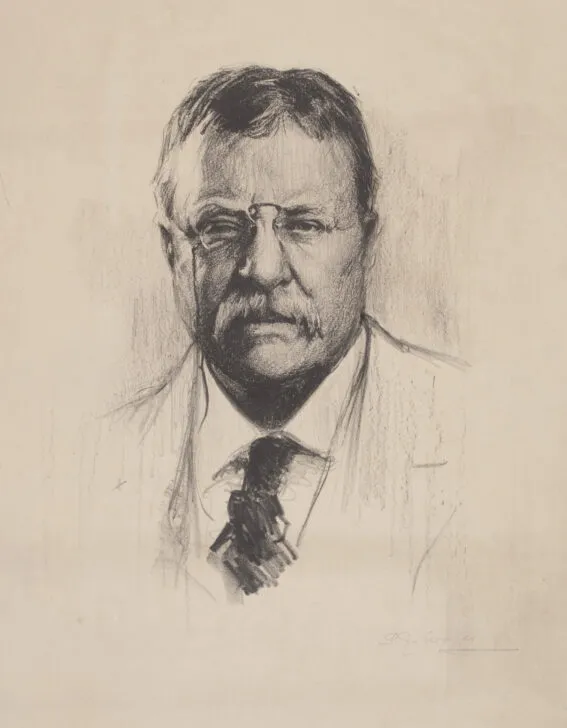 Photo: Theodore Roosevelt, via umma.umich.edu
His "Bull Moose" campaign achieved what third-party advocates always dream of: it fundamentally altered the terms of political debate. Roosevelt forced both major parties to address progressive reforms they had previously ignored. He demonstrated that voters would support candidates who challenged corporate power and championed social justice.
The campaign's ultimate failure—Woodrow Wilson's victory in a three-way race—obscured its more significant long-term impact. Within a decade, both major parties had adopted substantial portions of Roosevelt's progressive agenda. The reforms he championed became law, but under Democratic and Republican auspices.
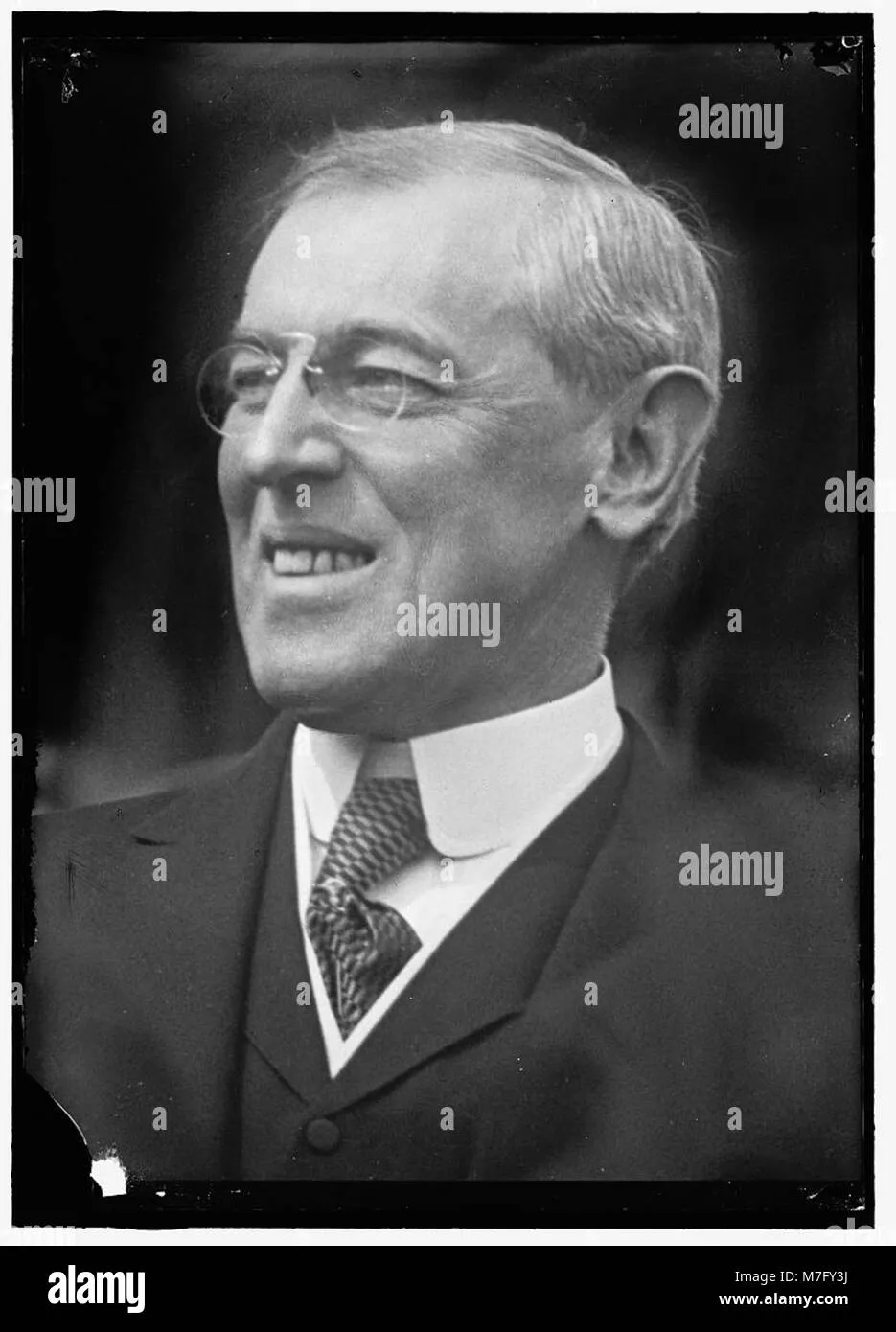 Photo: Woodrow Wilson, via c8.alamy.com
The Progressive Party disappeared, but progressivism survived by being metabolized into the existing system.
The Perot Phenomenon
Ross Perot's 1992 campaign represented the most successful third-party effort in modern American history, capturing nearly 19 percent of the popular vote. Perot's success seemed to validate everything third-party advocates had always believed: that voters would abandon the major parties if presented with a credible alternative.
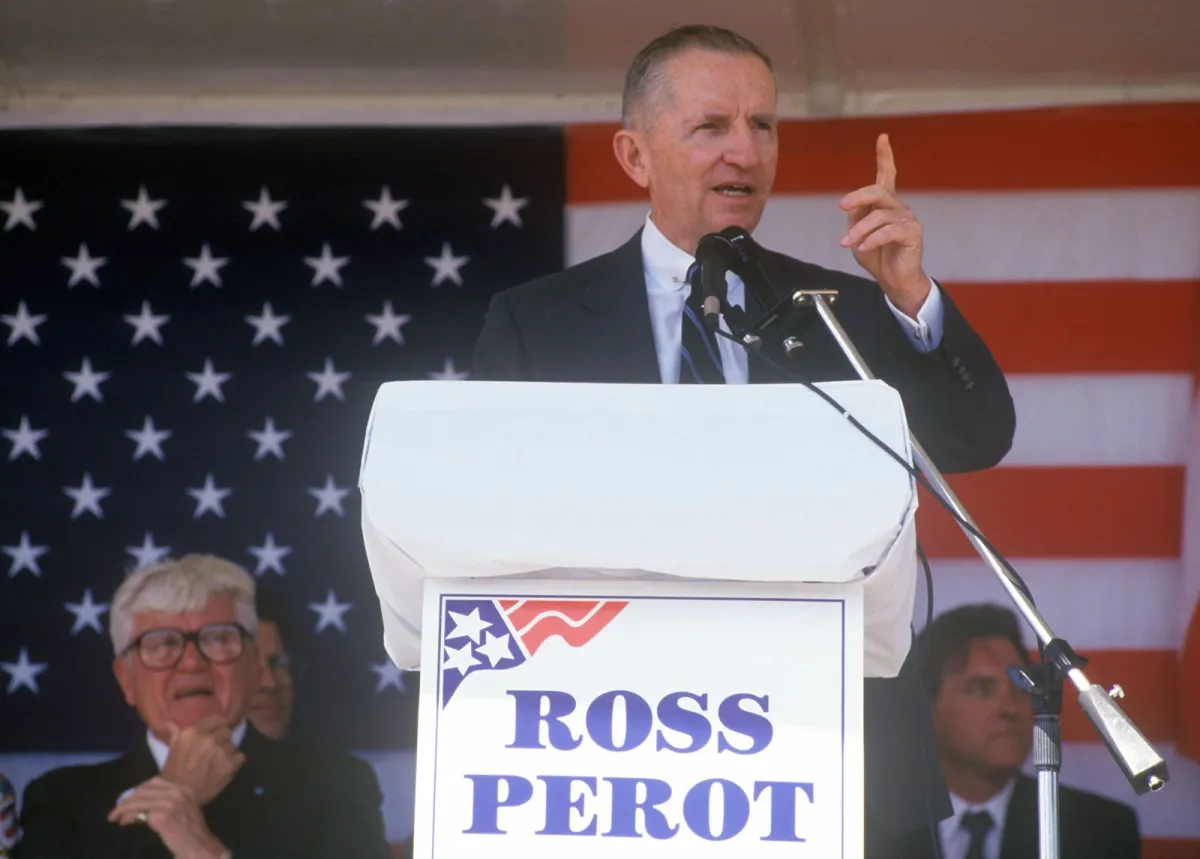 Photo: Ross Perot, via cdn.britannica.com
Perot's campaign combined populist rhetoric with technocratic solutions, anti-establishment anger with specific policy proposals. He used television appearances and infomercials to bypass traditional gatekeepers, pioneering techniques that would later be adopted by candidates across the political spectrum.
Most importantly, Perot demonstrated that the American electorate contained a substantial bloc of voters unattached to either major party—exactly the constituency that third-party movements had always claimed to represent.
Yet even Perot's historic performance followed the established pattern. His Reform Party briefly seemed poised for institutional permanence, winning ballot access in all fifty states and qualifying for federal matching funds. By 2000, it had devolved into factional infighting and irrelevance.
Meanwhile, both major parties incorporated elements of Perot's message. Deficit reduction became a bipartisan priority. Outsider candidates became mainstream. The anti-establishment rhetoric that defined Perot's campaign was adopted by politicians who had never spent a day outside government.
The Technological False Dawn
Contemporary third-party advocates place enormous faith in technology's capacity to level the electoral playing field. Social media, they argue, allows insurgent candidates to reach voters directly without relying on traditional media gatekeepers. Crowdfunding democratizes campaign finance. Digital organizing tools enable grassroots movements to compete with established party machinery.
This technological optimism echoes similar arguments made about radio in the 1920s, television in the 1950s, and cable news in the 1980s. Each new medium was supposed to disrupt the two-party monopoly by giving outsiders access to voters. Each time, the major parties adapted to the new technology faster and more effectively than their challengers.
The pattern reveals a fundamental misunderstanding of why the two-party system endures. Third-party advocates consistently focus on tactical questions—ballot access, media coverage, campaign finance—while ignoring the structural incentives that make two-party dominance inevitable.
The Electoral College's Iron Logic
The American electoral system doesn't merely discourage third parties; it makes them mathematically counterproductive. The Electoral College's winner-take-all structure means that any vote for a third-party candidate effectively helps elect that voter's least preferred major-party option.
This isn't a design flaw but a deliberate feature. The Founders understood that multi-party systems often produce governmental paralysis and instability. They created institutions that would force political coalitions to form before elections rather than after them.
Every successful third-party movement in American history has eventually faced the same choice: remain pure and irrelevant, or compromise and be absorbed into one of the major parties. The rare movements that chose purity—the Socialist Party, the Libertarian Party—maintained their independence by accepting permanent marginalization.
The Metabolic Process
The two-party system's genius lies not in preventing challenges but in metabolizing them. When a third-party movement gains traction by articulating neglected concerns or mobilizing overlooked constituencies, the major parties don't compete directly with the insurgent. Instead, they adopt its most popular positions while maintaining their institutional advantages.
This process serves a valuable democratic function. Third parties often identify genuine problems and propose innovative solutions that major parties are too cautious to embrace. By forcing these issues into mainstream political discourse, third-party movements expand the range of acceptable political debate even when they fail to achieve electoral success.
The cycle repeats because each generation faces new challenges that the major parties are slow to address. Young activists, observing this sluggishness, conclude that the system itself is broken rather than recognizing that it's working exactly as designed—slowly, cautiously, but ultimately responsive to sustained popular pressure.
The Permanent Revolution That Never Comes
The dream of breaking the two-party system represents a fundamentally American form of optimism: the belief that the right combination of passion, organization, and technology can overcome any institutional obstacle. This optimism is both the third-party movement's greatest strength and its fatal weakness.
It ensures that every generation will produce idealistic reformers willing to challenge entrenched power. It also guarantees that these reformers will consistently underestimate the system's capacity to absorb and neutralize their challenges while adopting their most valuable innovations.
The long game of American politics isn't about replacing the two-party system but about using third-party pressure to expand the boundaries of acceptable political discourse. The revolution never comes, but the threat of revolution keeps the system responsive to changing public opinion.
In this sense, third-party movements succeed even when they fail, serving as democracy's loyal opposition to its own institutional limitations.