The Veto at the Ballot Box: What Americans Actually Choose When They Say They Want Change
The polling on this question is remarkably stable. Ask Americans whether they prefer a government in which one party controls the presidency and both chambers of Congress, or a government divided between the parties, and a plurality will reliably choose unified control. The reasoning offered is intuitive: unified government can act, divided government cannot, and action is what voters say they want.
Then watch what they do.
Since World War II, the United States has experienced divided government — defined as the presidency held by one party while at least one chamber of Congress is controlled by the other — for roughly two-thirds of the time. This is not an artifact of electoral mechanics or geographic sorting, though both play a role. It is, in substantial part, a product of voters who split their tickets, who surge to the polls in midterm elections specifically to check the party they voted for two years earlier, and who have demonstrated across generations a revealed preference that stands in persistent contradiction to their stated one.
The question worth asking, with the patience that the long view affords, is whether the contradiction is a failure of democratic wisdom or an expression of it.
What History Does With Unified Power
The historical record of what happens when one American party achieves genuine unified control — the presidency, the Senate, the House, and ideally a sympathetic Supreme Court — is instructive, though not in the way that the beneficiaries of such moments typically expect.
The 89th Congress, convening in January 1965 with Lyndon Johnson riding the largest popular vote landslide in American history and Democrats holding more than two-thirds of both chambers, produced the most ambitious legislative output since the New Deal: the Civil Rights Act of 1964 had already passed, but the Voting Rights Act, Medicare, Medicaid, the Higher Education Act, and the Immigration and Nationality Act all followed in rapid succession. By almost any measure of legislative productivity, it was a remarkable two years.
It was also the last Democratic majority of that scale for a generation. The backlash was swift, structural, and durable. The Great Society's ambitions outran the political coalition that had enacted them. By 1966, Republicans had recovered 47 House seats. By 1968, the Democratic coalition had fractured in ways that would take decades to partially reassemble.
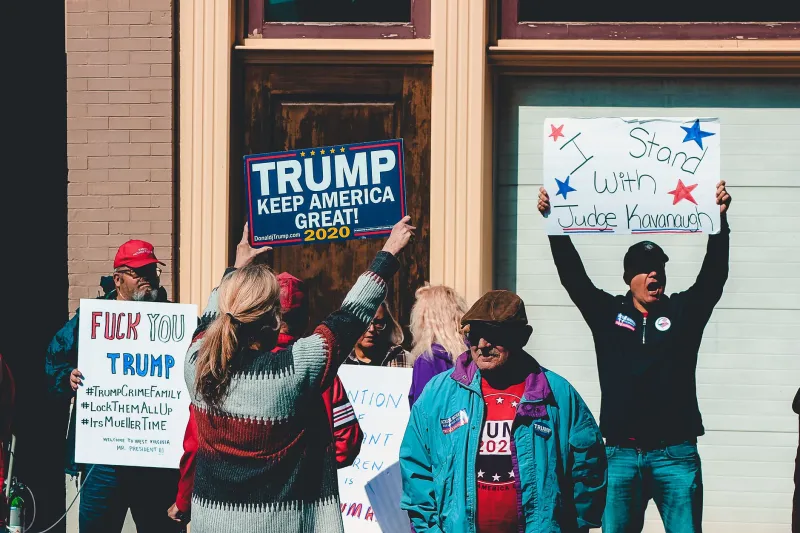
The pattern recurs. George W. Bush's post-September 11 unified government produced the Iraq War authorization, the PATRIOT Act, and the Department of Homeland Security — followed by a 2006 midterm that returned both chambers to Democratic control. Barack Obama's 2008 unified government produced the Affordable Care Act and the American Recovery and Reinvestment Act — followed by a 2010 midterm that produced the largest Republican House majority since 1946. Donald Trump's 2016 unified government produced significant tax legislation and substantial judicial appointments — followed by a 2018 midterm that flipped the House to Democratic control by the largest margin since Watergate.
The American electorate, whatever it tells pollsters, appears to apply a consistent corrective to unified power within roughly two years of its establishment.
The Wisdom Encoded in Ambivalence
Political scientists have offered several explanations for this pattern, none fully satisfying on its own. Median voter theory suggests that the parties, once freed from the need to appeal to the center, govern from their ideological flanks and lose the voters who elected them. Thermostatic opinion theory — developed by political scientist Christopher Wlezien — proposes that public opinion moves in the opposite direction from policy, so that liberal governance produces conservative public sentiment and vice versa.
Both theories are supported by evidence. Neither fully accounts for the consistency of the phenomenon or the speed with which it operates.
A more historically grounded explanation draws on something older than modern polling methodology. The fear of concentrated power is not a recent American innovation. It is the founding premise of the constitutional architecture. The separation of powers, the bicameral legislature, the federal structure, the Bill of Rights — all of these reflect a founding generation that had read its history carefully and concluded that the concentration of authority in a single institution, a single faction, or a single person was the precondition for tyranny.
James Madison's argument in Federalist No. 51 — that ambition must be made to counteract ambition — was not a cynical concession to human weakness. It was a design principle derived from the observation that human psychology had not changed between ancient Athens and eighteenth-century Philadelphia, and showed no signs of changing thereafter. The constitutional structure was built to frustrate unified power. The electoral behavior of subsequent generations may simply be the living expression of the same instinct.
The Preference Nobody Admits
There is a reason voters do not tell pollsters they prefer divided government. Divided government sounds like failure. It conjures images of gridlock, of nothing getting done, of endless partisan combat. These images are not entirely inaccurate. Divided government is frequently frustrating, often slow, and occasionally paralyzing.
It is also, by the historical evidence, substantially safer than the alternative.
The major policy failures of the past century — the Gulf of Tonkin resolution, the Iraq War authorization, the financial deregulation of the late 1990s that contributed to the 2008 crisis — were not products of gridlock. They were products of consensus, of moments when unified or near-unified political will pushed through decisions that subsequent history judged harshly. The checks that might have slowed those decisions were, in each case, either absent or deliberately circumvented.
This is not an argument that divided government produces good outcomes. It produces its own category of failures, including the debt ceiling crises, the government shutdowns, and the legislative inertia that allows pressing problems to compound while political factions maneuver for position. The argument is more modest: divided government tends to prevent the worst outcomes more reliably than it produces the best ones, and voters who have lived through enough cycles of unified ambition and subsequent correction may have internalized this asymmetry even if they cannot articulate it.
The Revealed Preference
The gap between what Americans say they want and what they consistently vote for is not unique to the question of divided government. Human beings are reliably poor predictors of their own preferences, a finding so robust in behavioral economics and psychology that it has generated entire subfields of research. What people say they will choose and what they actually choose when the moment arrives are frequently different things.
In most domains, this gap is a problem to be corrected. In electoral behavior, it may be a feature rather than a bug. The voter who tells a pollster she wants unified government and then splits her ticket two years later is not being irrational or inconsistent. She is, in the language of revealed preference, telling us what she actually values — and what she actually values, it turns out, is not the efficiency of unified control but the security of distributed power.
History has given her ample reason for that preference. The question is whether she knows it consciously or simply feels it, the way one feels the wisdom of not putting all of one's weight on a single support. The long game of American democracy suggests that the feeling, whatever its source, has been doing useful work for a very long time.