The Faithful and the Forgotten: How American Presidents Have Always Governed Past Their Most Devoted Supporters
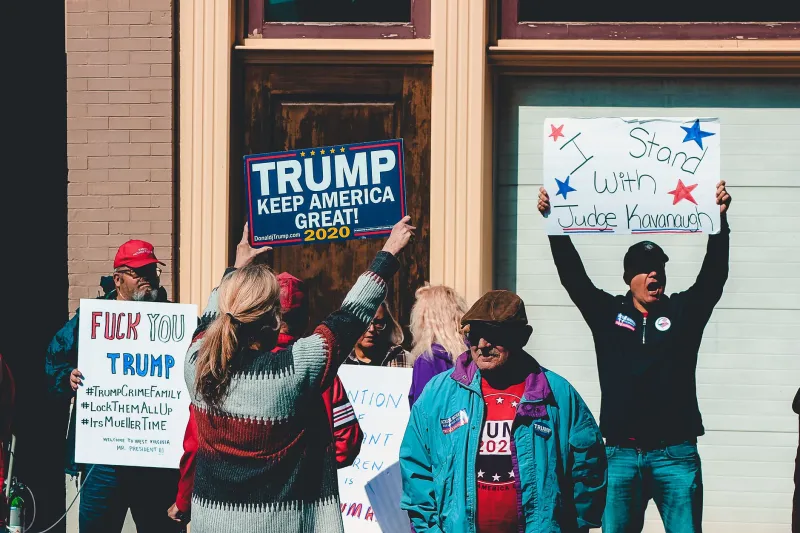
Every four years, a coalition assembles around a presidential candidate. Within that coalition, there is always an inner ring — the true believers, the early adopters, the volunteers who knocked on doors in February when the polls looked impossible, the donors who gave when giving looked foolish, the voters who defined their political identity around this particular candidacy. These are the people who feel, with some justification, that they made the presidency possible.
They are almost never the people the presidency is made for.
The gap between the coalition that elects a president and the coalition a president governs for is not an accident, and it is not primarily a function of character. It is the output of a structural logic that has been operating since the republic's founding, one that transforms the political economy of winning into something quite different from the political economy of governing. Understanding that logic does not require cynicism. It requires only attention to what American presidents have actually done, consistently, across two and a half centuries — as opposed to what they said they would do.
The Geometry of Electoral Coalitions
To win a presidential election, a candidate must assemble a majority — or at least a plurality — from a population that holds genuinely diverse and often incompatible preferences. The coalition is therefore always a negotiated artifact, held together by the shared imperative of defeating the opposition rather than by agreement on what victory should produce.
The inner ring of true believers is essential to this coalition precisely because their intensity is disproportionate to their numbers. They donate, organize, persuade, and mobilize in ways that casual supporters do not. A campaign without an energized base cannot function. A governing coalition that is organized primarily around the base's preferences cannot expand.
This is the structural trap. The same intensity that makes base supporters indispensable to winning makes them politically expensive to govern for. Their preferences are often the most ideologically distinctive elements of the coalition — the positions most likely to alienate the swing voters and institutional actors whose cooperation governing requires. A president who governs as the base demands will frequently lose the center. A president who governs toward the center will always disappoint the base. Most presidents, facing this choice, have chosen the center — while continuing to speak the language of the base.
Andrew Jackson and the Original Betrayal
The template was established early. Andrew Jackson's 1828 campaign was built on a rhetoric of radical democratic populism — government for the common man, against the moneyed aristocracy, against the entrenched Eastern establishment that had stolen the 1824 election from its rightful winner. The coalition that elected him included frontier settlers, Southern planters, urban workers, and everyone who had felt excluded from the genteel republic of the founding generation.
Jackson's presidency delivered some of what his most passionate supporters wanted, particularly in his war against the Bank of the United States. But it also delivered a governing style that systematically prioritized Southern planter interests, pursued Indian removal with a brutality that served land-hungry elites as much as frontier settlers, and constructed a patronage system that enriched the political professionals who managed his coalition rather than the ordinary voters who composed it.
The Jacksonian base — the working men of the cities, the small farmers of the frontier — received the rhetoric of their empowerment in abundance. The material substance of that empowerment was distributed considerably more selectively. This was not hypocrisy in the simple sense. It was the predictable output of a governing coalition whose center of gravity was not where the campaign's emotional center had been.
The New Deal's Hidden Architecture
Franklin Roosevelt's coalition offers a more complex version of the same pattern. The New Deal is remembered, accurately, as the most consequential expansion of federal economic intervention in American history. It is less often remembered that the coalition Roosevelt actually governed for was substantially more conservative than the labor organizers, socialist intellectuals, and unemployed workers who formed his most passionate supporters.
The New Deal's legislative architecture was systematically shaped by the need to retain Southern Democratic support — which meant that agricultural labor, domestic workers, and other predominantly Black workforces were frequently excluded from the social insurance programs the New Deal created. The most ardent progressive supporters of the Roosevelt coalition received a version of what they wanted: federal intervention, labor protections, financial regulation. They did not receive the version they had imagined, because that version was incompatible with the Southern wing of the coalition that made governing majorities possible.
Roosevelt's genius was in managing the gap between what his base believed they were getting and what he was actually delivering — through the sheer scale of change relative to what preceded it, through rhetorical brilliance, and through the genuine material improvements that even the compromised version of the New Deal produced. The base remained devoted. The betrayal, such as it was, remained largely invisible to those most betrayed by it.
The Mechanism of Managed Disappointment
What Roosevelt understood intuitively, and what subsequent presidents have reproduced with varying degrees of skill, is that the management of base expectations is itself a governing art. The base must be kept engaged — their energy, their donations, their organizational capacity are needed for midterms, for re-election, for the maintenance of political viability. They cannot be openly abandoned. But they also cannot be given what they most want, because what they most want is typically incompatible with the broader coalition management that governing requires.
The solution that American presidents have repeatedly discovered is the politics of symbolic satisfaction: give the base the language, the gestures, the appointments that signal membership in their cause, while making the substantive governing decisions that the broader coalition demands. This is not a cynical calculation made in a single meeting. It is the accumulated output of thousands of individual decisions, each of which is individually defensible, and which collectively produce a presidency that looks quite different from the campaign that preceded it.
The base's recurring shock at this outcome reflects something genuine about the psychology of political devotion. The intensity of belief that makes a true believer effective as an organizer is precisely what makes them resistant to recognizing the pattern. To acknowledge that this president, like every president before them, will govern past their most devoted supporters requires acknowledging that the devotion was in some sense misplaced — a conclusion that the psychology of political identity makes extraordinarily difficult to reach.
The Structural Permanence of the Pattern
The specific content of the betrayal changes with each cycle. The base that felt abandoned after Barack Obama's first term had different grievances than the base that felt abandoned after George W. Bush's second, or Bill Clinton's first. But the underlying structure — passionate supporters discovering that the governing coalition's center of gravity was not where the campaign's emotional center had been — has remained constant across administrations of both parties, across ideological configurations, across historical periods with radically different policy contexts.
This consistency is the signal. When a pattern holds across two centuries, across multiple party systems, across wildly different political cultures, it is not being produced by individual failures of integrity. It is being produced by something structural — by the geometry of coalition building in a two-party system that requires broad majorities to govern, and by the fundamental incompatibility between the intensity of base politics and the breadth of governing coalitions.
The long game perspective suggests a simple, uncomfortable conclusion: the devoted supporter who expects a president to govern primarily for them is not being naive about this particular president. They are being naive about the institution. The presidency, as it has functioned for most of American history, is not designed to reward the most faithful. It is designed to manage the most numerous — which is always, in the end, a different group entirely.