Numbers Never Lie, But Counters Always Do: The Political Mathematics of American Democracy
The Original Sin of Democratic Arithmetic
The Constitution's most elegant compromise contained its most enduring poison. When the founders agreed to count enslaved people as three-fifths of a person for purposes of representation, they established a principle that would haunt American democracy for centuries: the census is not a neutral count but a political instrument, and the act of enumeration is always an act of power.
This mathematical sleight of hand was not accidental but essential to the republic's formation. Without it, Southern states would have lacked sufficient representation to ratify the Constitution. With it, they gained enough political weight to dominate national politics for the next seventy years. The Three-Fifths Compromise did not merely count people differently—it created different categories of personhood and embedded them in the basic machinery of democratic representation.
The Science of Selective Vision
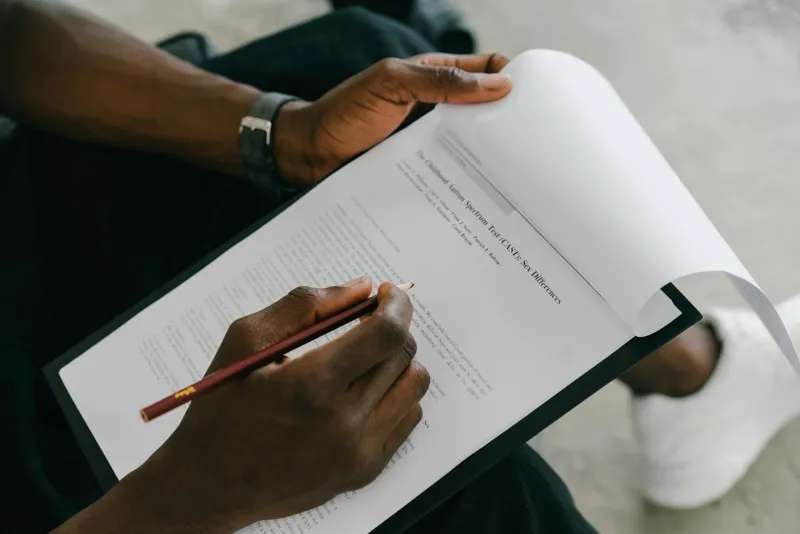
Every census since 1790 has faced the same fundamental challenge: whom do you count, how do you count them, and what do you do when your methods produce politically inconvenient results? The technical answers to these questions determine which communities gain representation and which lose it, making the Census Bureau one of the most powerful agencies in American government.
 Photo: Census Bureau, via www.census.gov
The 1920 census provided the clearest illustration of how statistical methodology becomes political warfare. For the first time in American history, the count revealed that more Americans lived in cities than on farms. Rural representatives in Congress understood immediately what this meant: reapportionment based on the new numbers would transfer political power from agricultural districts to urban centers, permanently altering the balance of American politics.
Their response was simple: they refused to reapportion. Congress ignored its constitutional duty for the entire decade, maintaining district boundaries based on 1910 data rather than accept the political consequences of demographic change. The urban majority that emerged in the 1920s would not receive proportional representation until after the 1930 census, and only then because the political balance had shifted enough to force compliance.
The Undercount as Weapon
The technical challenges of census-taking have always provided cover for political manipulation. Throughout the twentieth century, the Bureau consistently undercounted urban populations, particularly minorities and immigrants who were difficult to locate and reluctant to interact with government officials. This systematic undercount was not necessarily intentional, but its political effects were entirely predictable: urban districts received less representation than they deserved while rural districts maintained disproportionate influence.
By the 1980s, social scientists had developed statistical methods to estimate and correct for undercounting. The proposed solution was elegant: use demographic sampling techniques to adjust the raw count and produce more accurate population totals. The political implications were explosive: adjustment would shift representation toward Democratic-leaning urban areas and away from Republican-leaning rural ones.
The resulting battle lasted decades and reached the Supreme Court multiple times. Republicans argued that the Constitution required an "actual enumeration," not statistical estimates. Democrats countered that uncorrected undercounts violated the principle of equal representation. The technical debate about sampling methodology became a proxy war over the fundamental distribution of political power in America.
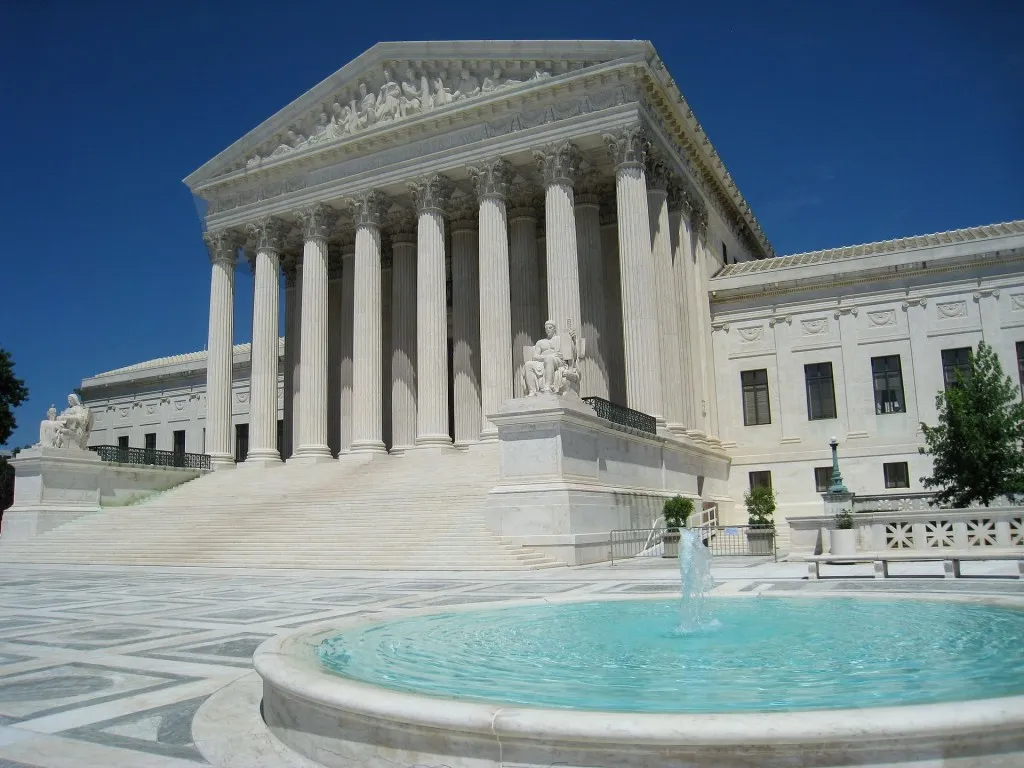 Photo: Supreme Court, via www.newyorkappellatelawyer.com
Digital Age, Ancient Problems
The 2020 census demonstrated how technological advancement has multiplied rather than resolved these underlying tensions. For the first time, most Americans could complete their census forms online, potentially improving accuracy and reducing costs. But the digital infrastructure also created new opportunities for manipulation and new sources of controversy.
The Trump administration's attempt to add a citizenship question to the 2020 census followed the historical pattern perfectly. Proponents argued that knowing citizenship status was essential for proper government planning. Critics recognized it as a transparent attempt to discourage immigrant participation and reduce the count in Democratic-leaning areas. The question itself was less important than its political function: creating fear that would distort the count in predictable ways.
When the Supreme Court blocked the citizenship question, the administration explored other methods to achieve similar results. The possibility of using administrative records to estimate citizenship status after the fact highlighted how modern data collection techniques could accomplish through the back door what political opposition prevented through the front door.
The Gerrymander's Foundation
The census provides the raw material for the most visible form of political manipulation: gerrymandering. Every ten years, state legislatures redraw district boundaries based on new population data, and every ten years, they use this opportunity to maximize their party's advantage and minimize their opponents'.
But gerrymandering represents only the final stage of a process that begins with the count itself. The census determines not just how districts are drawn but how many districts each state receives. A systematic undercount in urban areas does not just affect those specific communities—it reduces their state's total representation in Congress and the Electoral College.
This multiplier effect explains why census battles have become so intense. Manipulating the count provides a more durable advantage than manipulating district boundaries because reapportionment occurs only once per decade while districts can theoretically be redrawn more frequently.
The Persistence of Numerical Politics
The fundamental dynamic has remained constant across two and a half centuries because it reflects an unresolvable tension within democratic governance. Representation must be based on population, but population is not a self-evident fact—it is a political construct that depends on countless decisions about whom to count, how to count them, and what to do with the results.
These decisions cannot be made neutrally because neutrality itself is a political position. Choosing to count everyone equally privileges certain communities over others. Choosing to adjust for undercounting benefits some areas at the expense of others. Choosing to ignore undercounting perpetuates existing inequalities. There is no purely technical solution to what is fundamentally a political problem.
The 2030 census will face familiar challenges in new forms. Immigration, urbanization, and technological change will create fresh opportunities for both accuracy and manipulation. The political parties will deploy increasingly sophisticated arguments about statistical methodology while pursuing the same ancient goal: ensuring that the numbers support their vision of who deserves power and who does not.
The census will remain a weapon because democracy requires measurement, and measurement is never neutral. The counters will continue to lie—not necessarily about the numbers themselves, but about what the numbers mean and why they matter.