The Executive Credential Nobody Wants: How the Governor's Mansion Became a Presidential Liability

Photo: Xpixupload Camera location21° 18′ 24.34″ N, 157° 51′ 26.53″ W View this and other nearby images on: OpenStreetMap 21.306760; -157.857370, Public domain, via Wikimedia Commons
The Executive Credential Nobody Wants: How the Governor's Mansion Became a Presidential Liability
There is a particular kind of political résumé that, for most of American history, was considered the gold standard for presidential ambition. It involved managing a real budget, commanding a state's executive agencies, negotiating with a legislature that had its own priorities and its own constituencies, and being held accountable for the results in a jurisdiction where the consequences of policy decisions were visible and immediate. It was called being governor. And for roughly 150 years, it was the most reliable credential a presidential candidate could possess.
The list of governors who reached the White House is long enough to constitute a pattern: Jefferson, Monroe, Van Buren, Polk, Hayes, Cleveland, McKinley, Theodore Roosevelt, Wilson, Coolidge, Franklin Roosevelt, Carter, Reagan, Clinton, George W. Bush. The governor's mansion was not merely a launching pad — it was, in the considered judgment of the American electorate for most of the republic's history, the closest available approximation of the job being sought. Running a state was running something. It produced a record, a track record, and a set of tested executive instincts that no amount of legislative service could replicate.
The erosion of that logic over the past two decades is one of the more consequential and underexamined shifts in American political culture. It deserves more serious attention than it typically receives.
What Governors Actually Do
The relevant comparison is not between governors and senators in some abstract credential hierarchy. It is between the specific demands of executive governance and the specific demands of legislative performance — and the question of which one more closely resembles the presidency.
A governor manages a bureaucracy. A senator debates one. A governor must produce a budget that balances, or explain publicly why it does not. A senator votes on a budget resolution that may never become law. A governor appoints department heads, coordinates emergency responses, negotiates with public employee unions, and signs or vetoes legislation produced by a body that may be controlled by the opposing party. A senator gives speeches, sits on committees, and votes on bills that someone else drafted.
This is not a criticism of senators. Legislative service develops real and valuable skills. But those skills are categorically different from executive skills, and the presidency is, in its constitutional design, an executive office. The framers understood this distinction with some precision. Alexander Hamilton, in Federalist No. 70, argued at length that energy and decisiveness in the executive were essential to good government — qualities that are tested and demonstrated in executive roles and largely untested in legislative ones.
For most of American history, the electorate seemed to share this intuition. The preference for governors reflected a practical judgment about preparation for power. What changed was not the nature of the presidency. What changed was the nature of the selection process.
The Media Environment's Revaluation
The shift away from governors as presidential front-runners accelerates, with some precision, in the era of the 24-hour news cycle and, later, the social media environment. This correlation is not coincidental.
Governors accumulate records. Records contain decisions. Decisions produce constituencies who were harmed by those decisions — or who can be made to appear harmed by selective presentation. A governor who restructured a state's Medicaid program made specific choices that affected specific people in specific, documentable ways. A senator who voted against a Medicaid bill voted against an abstraction. The governor's record is a target-rich environment for opposition research. The senator's record is a series of votes that can be contextualized, reframed, or explained as tactical positioning.
In a media environment that rewards the vivid over the substantive, the governor's executive record is a liability precisely because it is real. The most defensible gubernatorial decisions — the ones that required genuine political courage and produced demonstrable long-term benefits — are also often the ones that created short-term pain for identifiable groups. Those groups have memories, and in the modern media environment, their memories are amplified and monetized.
The senator, by contrast, has largely been insulated from this dynamic. A legislative career can be curated. It can be presented as a series of positions rather than a series of consequences. The senator who spent a decade on the Foreign Relations Committee can present himself as a foreign policy expert without ever having made a foreign policy decision that cost anything or hurt anyone.
The Historical Irony
The irony runs deep. The credential that best prepares a person to serve as president — demonstrated executive competence in a real governing environment — has become, in the current political marketplace, a source of vulnerability rather than strength. Meanwhile, the credential that least resembles the actual demands of the presidency — years of legislative positioning, committee work, and floor speeches — has become the more politically viable path to the nomination.
This inversion has historical precedents that are not encouraging. The Roman Senate's preference for orators over administrators in the late republic contributed to a governing class that was extraordinarily accomplished at argument and consistently inadequate at execution. The British Parliament's long tradition of producing prime ministers who had never managed anything larger than a constituency office before assuming control of the world's largest empire produced, with some regularity, leaders whose parliamentary brilliance was entirely untransferable to the demands of executive governance.
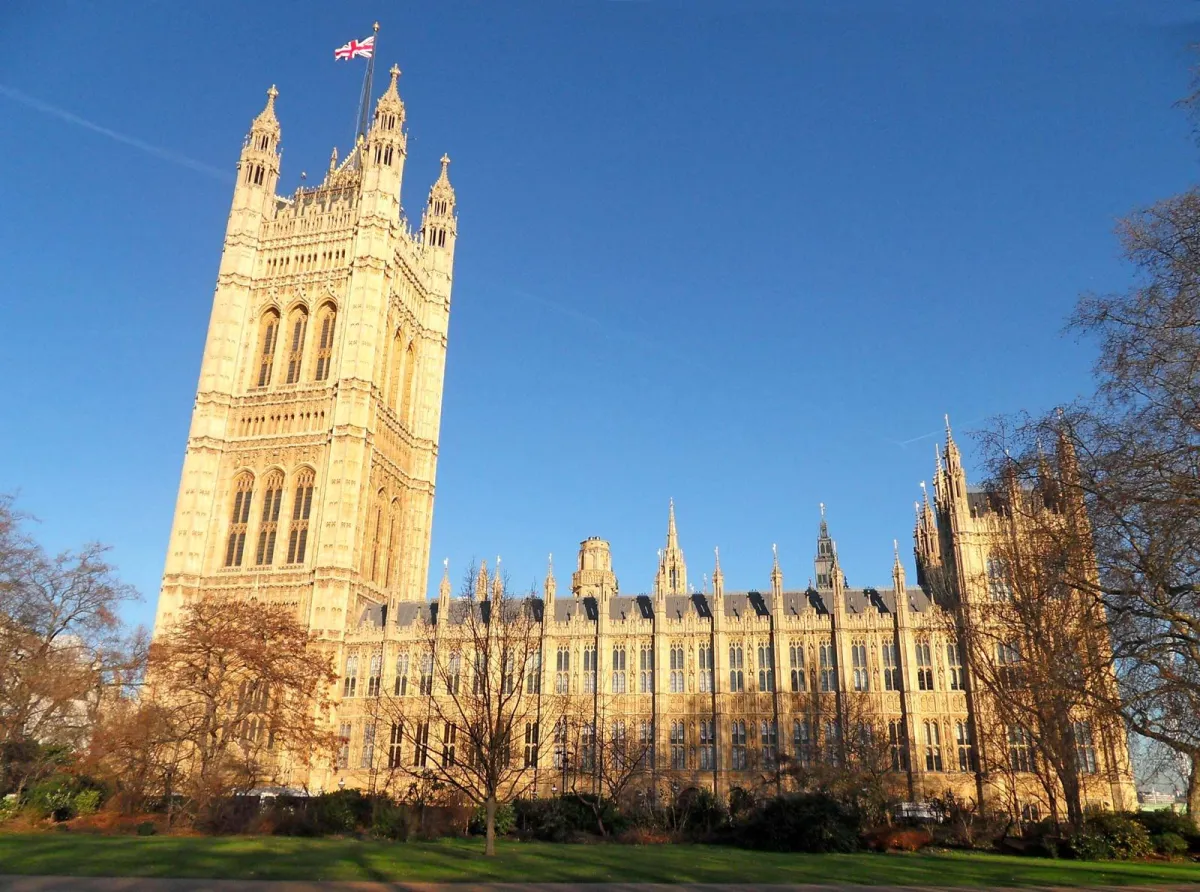 Photo: British Parliament, via cdn.britannica.com
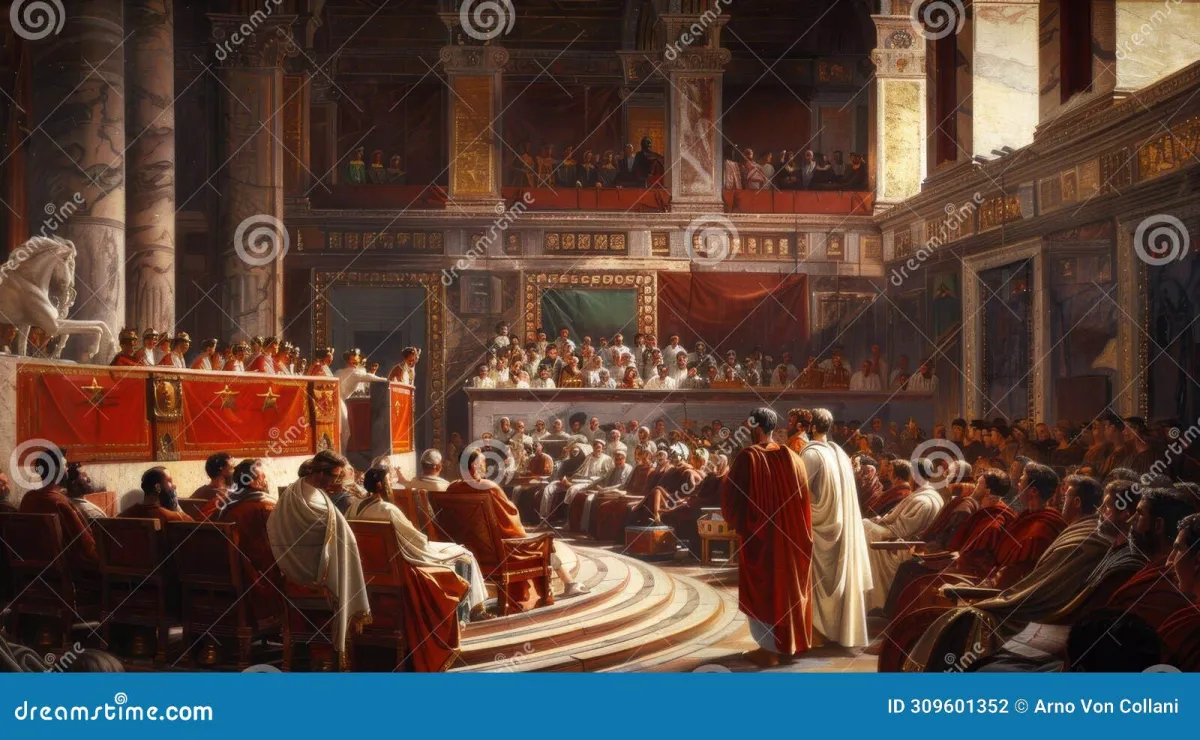 Photo: Roman Senate, via thumbs.dreamstime.com
The American version of this dynamic is still relatively recent, which means its full consequences have not yet fully materialized. But the early returns are available for inspection. The last several decades have produced a presidency that is increasingly defined by communication performance — the tweet, the press conference, the televised address — and decreasingly defined by the administrative competence that actually determines whether government functions.
What the Credential Reveals
The deeper question is not merely electoral. It concerns what the disappearance of the governor as presidential archetype reveals about the electorate's evolving understanding of what the presidency is.
If voters are consistently selecting for performance over administration — for the candidate who communicates most compellingly about what they intend to do rather than the candidate who has demonstrated the ability to do it — then the presidency is being understood, functionally, as a rhetorical office. A communicator-in-chief rather than an executive-in-chief. This is a significant departure from the constitutional design, and from the practical demands of managing the federal government's four million employees, multi-trillion-dollar budget, and sprawling regulatory apparatus.
History does not suggest that electorates are irrational in their preferences. It suggests that electorates respond to the incentive structures and information environments available to them. The modern media environment makes gubernatorial records look like liabilities and legislative profiles look like clean slates. Voters are making reasonable choices given the information they receive. The problem is that the information environment has been systematically optimized for producing compelling candidates rather than competent executives.
The long game here is straightforward, if uncomfortable: a democracy that consistently selects for the wrong credential will eventually have to reckon with the gap between the performance it elected and the governance it needed. That reckoning, when it arrives, tends to be expensive.