Governing at Gunpoint: The Long History of America's Manufactured Fiscal Crises
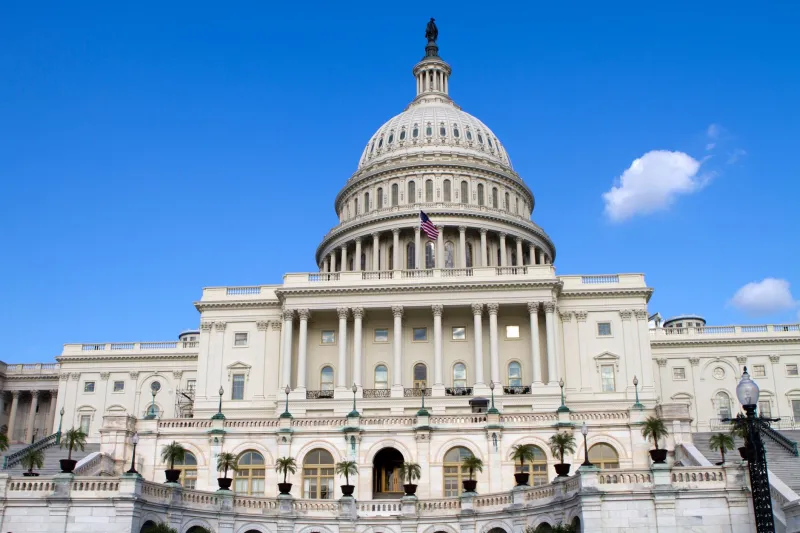
Every few years, with the reliability of a recurring fever, the United States government approaches the edge of a fiscal cliff that it built itself. Cable news fills with countdown clocks. Members of Congress issue competing statements about who is holding whom hostage. And then, typically at the last possible hour, a deal is struck — not because the underlying disagreements were resolved, but because the deadline arrived. The shutdown, or its near-miss, is invariably described as a sign of how broken Washington has become. What that framing misses is the longer view: the crisis was always the mechanism. The dysfunction was always the design.
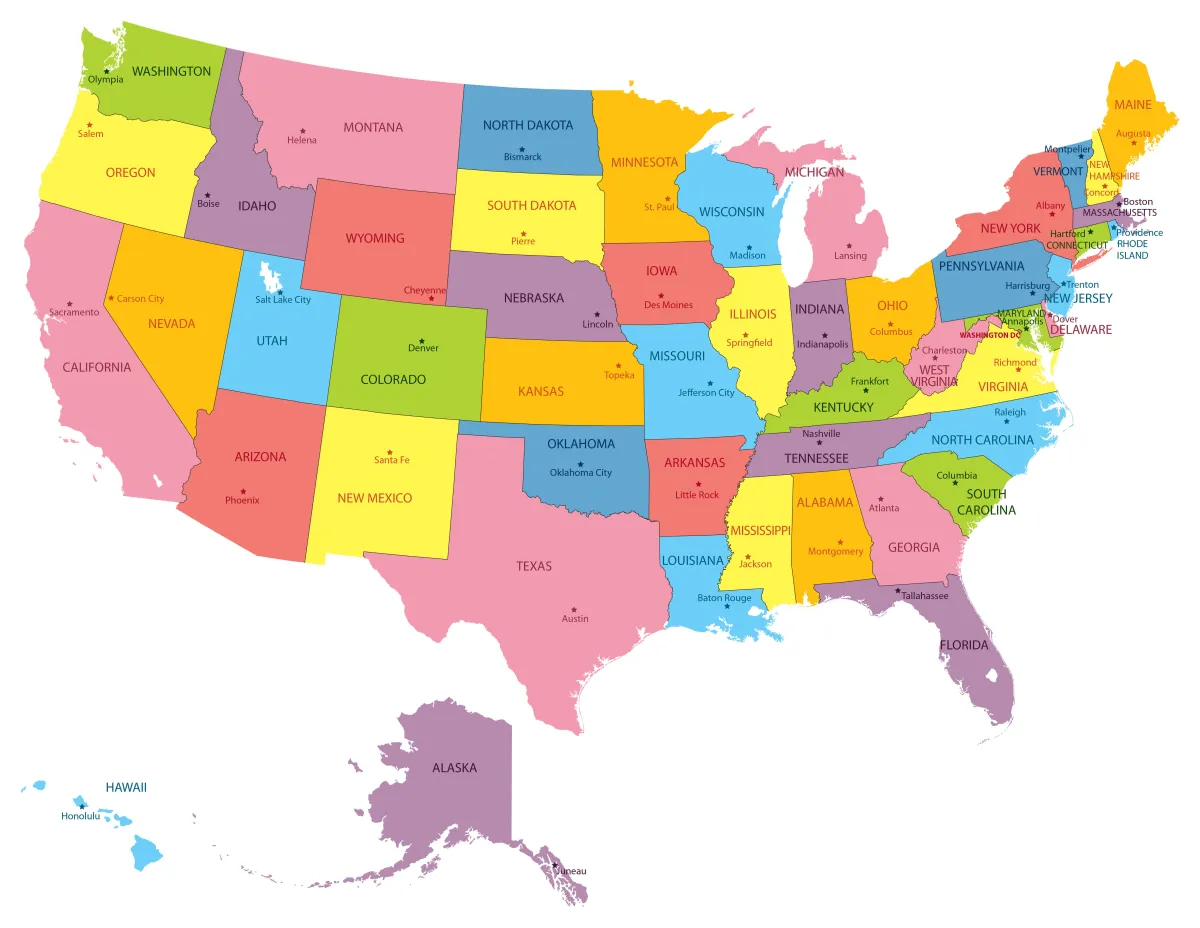 Photo: United States, via www.worldmap1.com
Human beings negotiate differently under pressure than they do in the abstract. This is not a controversial psychological observation — it is one of the most replicated findings in behavioral research, confirmed not just in laboratory settings but across five thousand years of recorded political history. Legislators who will not move for months will move in hours when a clock is running. The question worth asking is not why modern Congresses have allowed this dynamic to take hold, but why anyone expected they would behave differently from every governing body that came before them.
The Constitution's Loaded Weapon
The framers handed Congress the power of the purse with clear intent. It was designed to be a check on executive ambition — a mechanism by which the branch closest to the people could constrain a president who might otherwise govern as a monarch. James Madison and his colleagues understood, with considerable sophistication, that the control of money was the control of policy. What they did not fully anticipate — or perhaps what they anticipated and accepted — was that a weapon designed to restrain the executive could just as easily be turned inward, wielded by one legislative faction against another, or by Congress against itself.
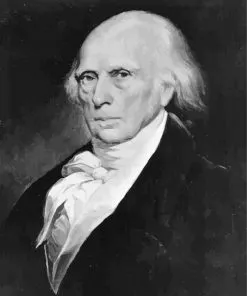 Photo: James Madison, via numeralpaint.com
The earliest Congresses were not immune to this logic. Appropriations battles in the 1790s frequently carried an edge of tactical brinksmanship that would be recognizable to any observer of the modern budget process. The specific mechanisms have evolved — continuing resolutions, debt ceiling statutes, sequestration triggers — but the underlying dynamic has remained stable across two centuries: when a political actor cannot win a direct vote, the threat of fiscal paralysis becomes an alternative path to leverage.
The modern government shutdown, as a formal institutional phenomenon, dates to the Antideficiency Act and its subsequent interpretations. But the behavior the shutdown codifies — the deliberate manufacturing of a crisis deadline to extract concessions — is considerably older than any statute.
The Deadline as a Governing Unit
Consider what the repeated use of shutdown mechanics has actually accomplished over time. It has not resolved the policy disputes that nominally trigger it. Shutdowns have not produced lasting immigration reform, permanent spending agreements, or durable fiscal frameworks. What they have produced, reliably, is a temporary agreement to continue arguing — usually with the clock reset and the underlying conflict deferred.
This is not, as it might appear, a failure of the mechanism. It is the mechanism working as the incentive structure demands. A political system in which legislators face no personal cost for perpetual delay, but face significant collective cost for a missed deadline, will naturally migrate toward governing by deadline. The vote on the merits becomes secondary to the negotiation under pressure. Over time, the deadline stops being a forcing function applied to a real deliberative process and becomes the deliberative process itself.
Historians of the Roman Republic will find this pattern familiar. The Senate's tendency to defer existential decisions — on debt, on land reform, on the status of Italian allies — until the pressure of a military campaign or a tribune's ultimatum forced action was not a malfunction of Roman governance. It was Roman governance. The deadline was always how decisions got made. What changed, over centuries, was that the crises required to force action became progressively larger, until the republic required a crisis that it could not survive.
 Photo: Roman Republic, via images.pexels.com
The American version has not reached that terminus. But the trajectory of escalation is visible in the data. The stakes attached to each fiscal deadline have grown. The duration of shutdowns has increased. The number of government functions held in suspension during negotiations has expanded. Each cycle normalizes a slightly higher level of manufactured emergency as the baseline condition of governance.
What Normalizing the Emergency Costs
There is a subtler damage that the hostage budget inflicts, one that operates beneath the level of any individual shutdown. It concerns the public's understanding of what government is for and how it works.
When governance is consistently experienced as a series of near-catastrophes narrowly averted, citizens develop a particular relationship with their institutions — one defined less by civic trust than by crisis fatigue. The government that only functions under the gun is not experienced as a deliberative body serving the public interest. It is experienced as a dysfunctional negotiation that happens to affect the public, conducted by actors whose primary relationship is adversarial. The public learns, rationally, to expect paralysis as the default and relief as the exception.
This psychological conditioning has political consequences that outlast any individual budget fight. Electorates that have been trained to expect dysfunction are more susceptible to candidates who campaign on the dysfunction itself — who offer not better governance but the promise of burning down the apparatus that has made governance feel impossible. The manufactured crisis, repeated often enough, becomes an argument against the institutions that manufacture it.
The Recurring Logic
None of this is unique to the United States. Parliamentary systems have their own versions of the manufactured crisis — votes of no confidence deployed tactically, supply bills weaponized, confidence-and-supply arrangements used as perpetual leverage. The specific American innovation is the debt ceiling: a statutory constraint that Congress imposes on itself and then periodically threatens not to honor, creating a hostage situation in which the hostage is the full faith and credit of the United States government.
The debt ceiling has no meaningful parallel in the fiscal architecture of any other advanced democracy. Its periodic activation as a negotiating instrument would be, to a constitutional scholar from almost any other country, nearly incomprehensible. And yet it persists, because it works — not as policy, but as leverage. It produces concessions that could not be extracted through the normal legislative process. It is, in the precise sense of the term, a hostage mechanism that has been institutionalized.
The long game here is not reassuring. Mechanisms that begin as extraordinary measures tend, over time, to become ordinary ones. The extraordinary becomes routine, the routine becomes expected, and the expected becomes the only way anyone can imagine the process working. At that point, the question is no longer whether the gun is loaded. The question is whether anyone remembers what governing without it looked like — and whether the memory, if it exists at all, has any political constituency left.