The Governor's Trap: Why the Credential That Looks Best on Paper Has the Worst Track Record in Practice

Photo: Frank Schulenburg, CC BY-SA 4.0, via Wikimedia Commons
The Governor's Trap: Why the Credential That Looks Best on Paper Has the Worst Track Record in Practice
The theory is elegant, and it has been restated with remarkable consistency across American political history. Governors, unlike senators, actually run things. They manage bureaucracies, balance budgets, negotiate with legislatures, and face voters who care less about ideology than about whether the roads are plowed and the schools are functioning. They are, in the argot of every political consultant who has ever pitched one to a donor network, 'proven executives.' The presidency, after all, is an executive office. The logic appears unassailable.
The record appears to disagree.
What the Statehouse Actually Teaches
To understand why the governor's credential so frequently fails at the national level, it is necessary to understand what state executive experience actually trains a politician to do — and, more importantly, what it trains them to believe about themselves.
A successful governor operates within a defined geographic and cultural constituency. The coalition that elects a governor of Ohio or Georgia or Michigan is, by definition, a coalition of people who share a state. They share infrastructure concerns, a common economic base, and a set of regional political assumptions that the governor has spent years learning to navigate with precision. The governor becomes, over time, extraordinarily well-calibrated to this specific environment. That calibration is the source of their success. It is also the source of their eventual national failure.
The presidency does not reward calibration to a specific constituency. It rewards the capacity to hold together constituencies that have fundamentally different, and sometimes directly opposed, interests — simultaneously, without visibly choosing between them. This is a skill that state executive experience does not develop and may actually impair. A governor who has spent eight years making decisions for a coherent constituency arrives in Washington having practiced the wrong instrument.
The ancient Greeks distinguished between the skills required to govern a polis and those required to manage an empire. The administrator of a city-state could know his citizens personally, understand their specific concerns, and govern through direct relationships. The administrator of an empire had to govern through abstraction, symbol, and the management of subordinates who were themselves managing subordinates. The cognitive and political demands were categorically different. American governors repeatedly discover this distinction the hard way.
The Overconfidence Problem
There is a second, compounding difficulty. Successful governors arrive at presidential campaigns not merely with the wrong skills but with an abundance of confidence in those skills — confidence that the campaign process tends to validate rather than correct.
Thomas Dewey won two terms as governor of New York, then the most populous state in the union. He was, by any administrative measure, a capable executive. He ran two presidential campaigns carrying the conviction that governing New York had prepared him for governing the country. The 1948 campaign against Harry Truman revealed the gap between those two propositions with a clarity that remains instructive. Dewey ran a national campaign the way a competent governor runs a state — managing from above, projecting authority, assuming that the record would speak and that the coalition would hold. Truman ran as though he had nothing to lose and everything to prove, which was accurate, and which produced a different kind of energy entirely. Dewey's administrative confidence was real. His political intelligence about what a national coalition actually required was severely underdeveloped.
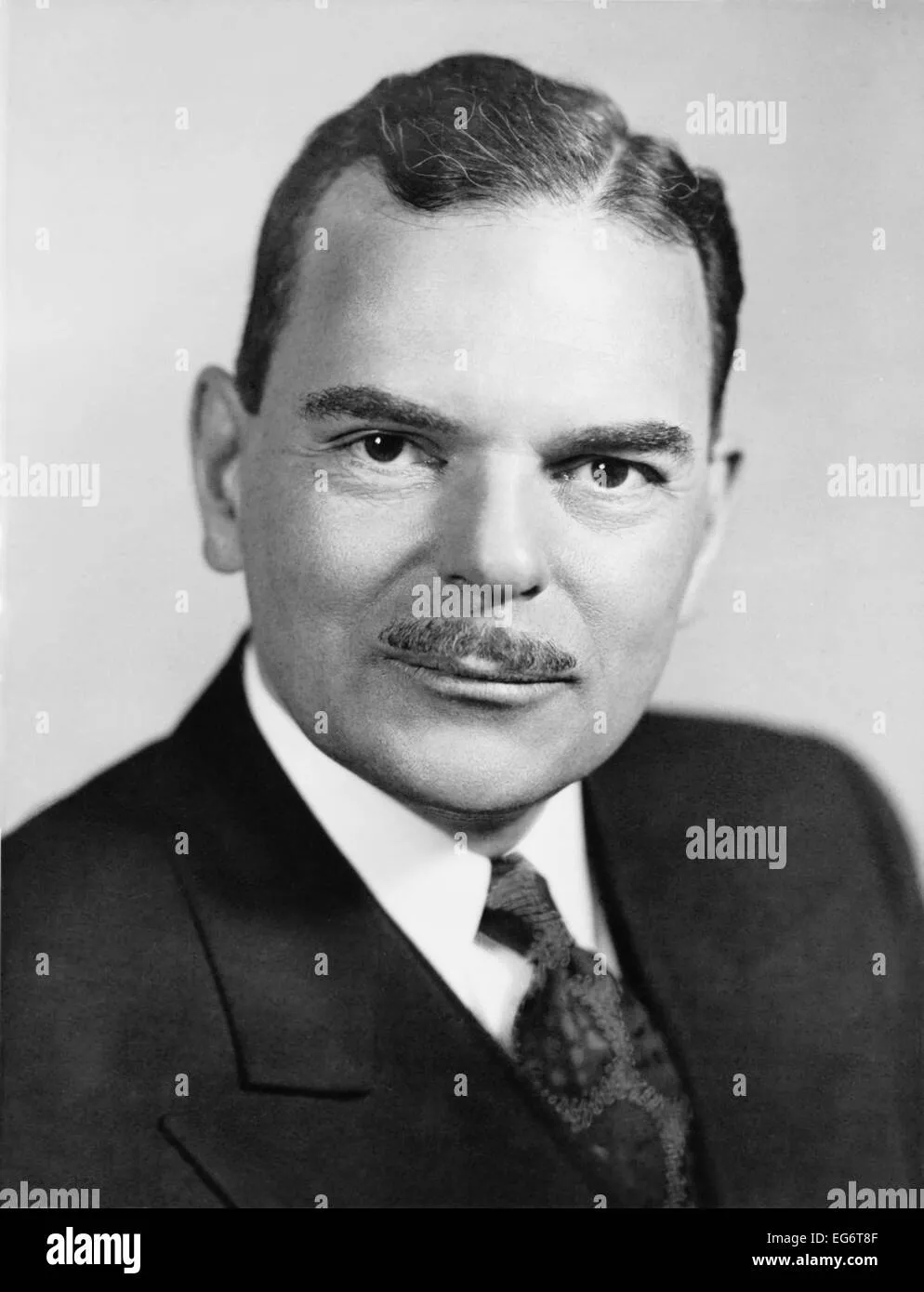 Photo: Thomas Dewey, via c8.alamy.com
The pattern recurs with uncomfortable regularity. Michael Dukakis in 1988 carried the Massachusetts economic recovery as his central credential — a legitimate achievement — and treated the presidential campaign as an extension of the same technocratic project. He was not wrong that the achievement was real. He was catastrophically wrong about whether a national electorate would receive it the way a Massachusetts constituency had. The Willie Horton episode did not simply expose a vulnerability in Dukakis's record. It exposed a deeper vulnerability in his theory of politics: that competent administration was a self-evident argument. At the state level, it frequently is. At the national level, it has never been sufficient on its own.
The Distance That Becomes a Liability
Political consultants have long sold the gubernatorial candidate's distance from Washington as an asset. And it is, during the campaign. Voters who are frustrated with federal dysfunction respond warmly to the candidate who can credibly say they have been solving problems rather than attending hearings. The distance generates genuine appeal.
Then the governor wins, and the distance becomes a problem.
Washington operates through relationships, institutional memory, and a dense network of informal understandings that take years to develop. A senator who runs for president and wins arrives carrying twenty years of those relationships. A governor who wins arrives carrying a state-level network that is largely irrelevant to the federal legislative environment. The learning curve is steep, and it arrives precisely when the political capital to absorb its costs is at its lowest.
Jimmy Carter's early congressional difficulties were not primarily ideological. They were relational. Carter's team arrived in Washington having governed Georgia, which meant they understood Georgia's political ecosystem with genuine depth. They did not understand Congress's ecosystem at all, and they showed it in ways that congressional Democrats — who had expected a partner — found alienating almost immediately.
The Lesson That Keeps Getting Ignored
What is remarkable about this pattern is not that it exists but that it persists. Every generation of political professionals rediscovers the governor as ideal presidential material and arrives at the same conclusion through the same reasoning. The credential looks perfect. The theory is sound. And then the gap between state executive experience and national coalition management opens up, right on schedule, and the pattern repeats.
Human beings are extraordinarily good at learning from personal experience and extraordinarily poor at learning from institutional memory. A political consultant who helped elect a governor to the presidency and watched the subsequent difficulties will carry that lesson for the rest of their career. The next generation of consultants, however, will run the same analysis on the new governor's résumé and arrive at the same conclusion their predecessors did. The logic is always compelling in the abstract. The history is always instructive in the specific. And the specific, for reasons that say something important about how political professionals think, consistently loses to the abstract.
The governor's mansion is not a launching pad. It is a credential that arrives pre-loaded with a set of assumptions about how power works — assumptions that the national stage will test, usually within the first year, and usually at considerable cost.