Mistakes Were Made: The Centuries-Long Architecture of American Institutional Non-Accountability

There is a phrase so familiar to American political life that it has become nearly invisible: mistakes were made. Grammatically, it is a masterpiece. The passive voice erases the actor entirely. The noun 'mistakes' floats free of any human hand that made them. The past tense signals that the matter is already receding. And the whole construction arrives wrapped in the syntax of confession, which means it satisfies, at least briefly, the audience demanding one.
This is not a modern invention. It is a very old technology.
The Grammar of Survival
Institutions — governments, corporations, churches, military commands — share a fundamental survival problem. When they err visibly enough that the public demands acknowledgment, they face a genuine dilemma: a full admission of fault triggers legal liability, political consequence, and the kind of narrative momentum that ends careers and dissolves coalitions. But silence, or outright denial, frequently makes the situation worse. The solution, refined across centuries of practice, is a third path — the performance of accountability without its substance.
Andrew Jackson, perhaps America's most combative president, was a sophisticated practitioner of this art. After the forced removal of the Five Civilized Tribes — a policy that resulted in the deaths of thousands — Jackson's public communications never approached anything recognizable as an apology. Instead, they offered a rhetorical maneuver that would become standard: the reframing of harm as benefit. The removal, in Jackson's telling, was a protection of native peoples from the encroachment of state governments. The suffering was acknowledged obliquely, attributed to circumstances, and the actor — Jackson himself, the federal government — was positioned as a reluctant instrument of historical necessity rather than its author.
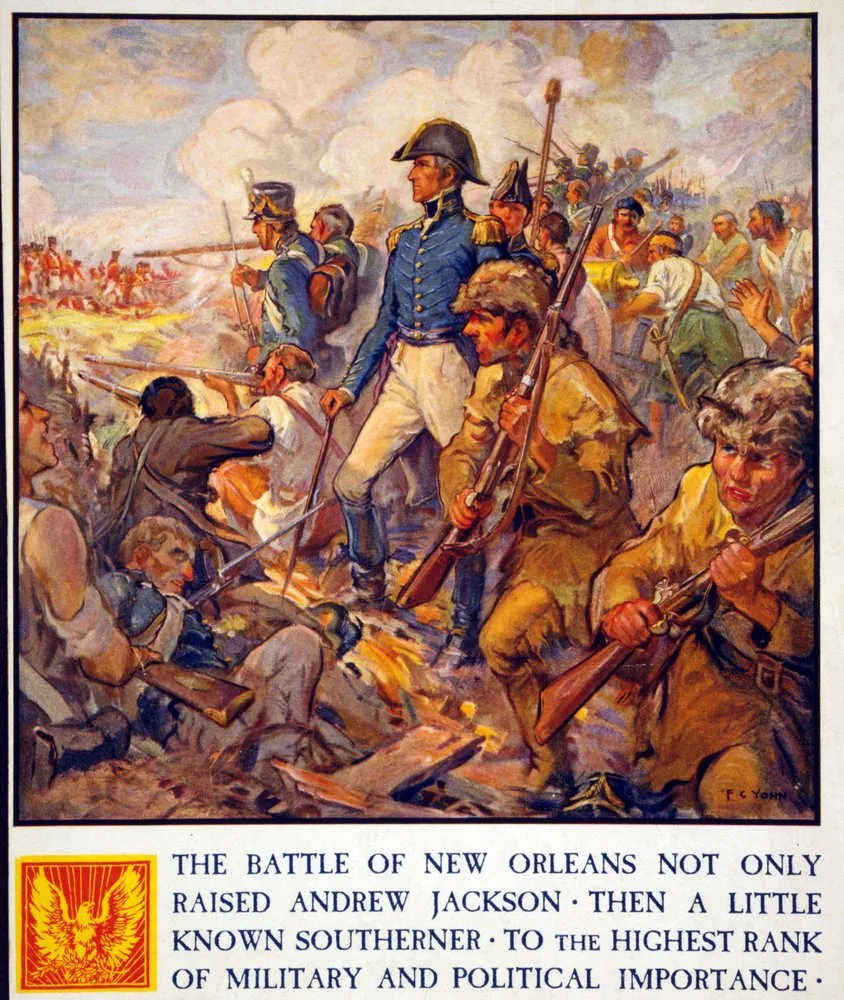 Photo: Andrew Jackson, via www.meisterdrucke.uk
This is a distinct move from simple denial. Denial invites refutation. The Jacksonian maneuver absorbs the accusation and re-emerges wearing it as a credential.
The Ritual Demand and Its Invented Supply
What makes the non-apology so durable is that it is responding to a genuine psychological need. Human beings, when they witness harm, require some form of acknowledgment before they can begin to process it. Anthropologists and psychologists who study restorative justice consistently find that victims frequently want recognition more than punishment — they want the record corrected, the harm named. Institutions learned this long before the academic literature caught up.
The Congressional resolution of regret is perhaps the purest institutional expression of this dynamic. The United States Congress has issued formal expressions of regret for Japanese American internment, for the overthrow of the Hawaiian monarchy, for the institution of slavery itself. Each of these resolutions follows a recognizable structure: the historical harm is named in careful detail, the language of sorrow is deployed with apparent sincerity, and then — in the fine print of legislative drafting — language is included explicitly stating that the resolution does not authorize or support any claim for damages or reparations.
The ritual is performed. The substance is withheld. The institution survives.
This is not cynicism for its own sake. It reflects something consistent about how power actually functions across recorded history. The Roman Senate was expert at issuing declarations that acknowledged the excesses of previous administrations while immunizing the current one. Medieval European courts developed elaborate ceremonies of royal penance — Henry II's famous public flagellation after the murder of Thomas Becket being perhaps the most theatrical — that were understood by all parties as political performances rather than genuine contrition. The form of accountability has always been more politically negotiable than its content.
 Photo: Thomas Becket, via c8.alamy.com
The Corporate Refinement
American corporations in the twentieth century took the non-apology and industrialized it. The tobacco industry's decades-long acknowledgment that 'questions existed' about the health effects of smoking while simultaneously funding research designed to keep those questions open represents perhaps the most consequential deployment of this strategy in modern history. The form was one of engaged, responsible inquiry. The substance was obstruction.
After major industrial disasters — Bhopal, the Exxon Valdez, the Deepwater Horizon — a recognizable corporate communications playbook emerged that has since been formalized into something close to a professional discipline. Express concern for victims immediately. Use language that centers empathy rather than causation. Commit to investigations and reviews. Never, under any circumstances, use the word 'fault' in proximity to the company's name. The legal teams and the communications teams have, over decades, developed a shared vocabulary that threads the needle between the appearance of accountability and its legal consequences.
What is striking, from a historical perspective, is how little this playbook differs from the one being run by Roman grain merchants accused of price manipulation in the second century. The specific medium changes. The structure does not.
The Political Press Conference as Morality Play
The modern presidential press conference has become a theater in which the non-apology reaches its highest formal development. The staging is precise: the leader appears before cameras, projects visible solemnity, acknowledges that 'the situation was handled imperfectly' or that 'communications could have been clearer' or — the most elegant formulation — that 'in retrospect, different decisions might have produced better outcomes.' Each of these constructions does significant work. They occupy the semantic space of contrition without making any of its commitments.
Reagan's 'mistakes were made' in the context of the Iran-Contra affair is the canonical modern example, but it is worth noting that the construction did not originate there and has not ended there. It recurs across administrations of both parties with a regularity that suggests it is not a partisan tactic but an institutional one — a feature of the office rather than the officeholder.
The press, for its part, has historically been complicit in this theater, partly because the non-apology is easier to cover than the absence of one. A statement, even a deeply evasive one, gives journalists something to quote, analyze, and respond to. It generates the appearance of a story resolving, which is narratively satisfying in a way that continued stonewalling is not.
What This Tells Us About Institutions
The persistence of the non-apology across cultures, centuries, and contexts is not primarily a story about dishonesty. It is a story about institutional logic. Organizations that survive long enough to require apologies have, by definition, developed survival instincts. Full admission of fault is, in most institutional contexts, genuinely dangerous — it invites cascading consequences that the institution may not survive. The non-apology is, from the institution's perspective, a rational adaptation.
What human psychology contributes to this equation is the audience's remarkable willingness to accept the form in place of the substance, at least temporarily. The ritual of acknowledgment — the solemn face, the careful language, the expressed commitment to 'doing better' — triggers enough of the psychological satisfaction of accountability that public pressure frequently dissipates before any actual consequence is extracted.
This is the long game that institutions have always played. They outlast the news cycle. They outlast the outrage. They perform the grammar of fault and guard its substance, and then they wait.
Five thousand years of recorded institutional behavior suggests they are usually right to do so.