The Unity Candidate Is Always a Symptom: America's Recurring Fever Dream of the Great Healer
Photo: Nancy Pelosi from San Francisco, CA, CC BY 2.0, via Wikimedia Commons
The Unity Candidate Is Always a Symptom: America's Recurring Fever Dream of the Great Healer
America does not produce unity candidates because it is unified. It produces them because it is not — and because the gap between the country it imagines itself to be and the country it actually is becomes, at predictable intervals, too painful to sustain without some symbolic gesture toward resolution.
The gesture never resolves anything. But the hunger for it tells us nearly everything.
The Anatomy of the Type
The unity candidate follows a recognizable pattern across American history that is consistent enough to suggest it is not a coincidence but a recurring structural response to a recurring structural problem. The figure emerges during a period of visible, acute national division. Their central brand proposition is not a policy agenda but a temperament — the implicit or explicit argument that they, unlike the others, are capable of speaking to the whole country rather than a faction of it. They are frequently positioned as outsiders to the existing partisan architecture, whether that positioning is accurate or not. And they are almost always described, by their supporters and often by themselves, as arriving at a unique historical moment that demands exactly what they uniquely offer.
Henry Clay called himself the Great Compromiser, and the title was not entirely self-flattering vanity — he did broker the Missouri Compromise of 1820 and the Compromise of 1850, two deals that briefly held the country together by deferring its central conflict rather than resolving it. Clay's career is instructive precisely because his compromises worked, in the narrow technical sense, and yet the unity they purchased was always temporary, always conditional, always dependent on both sides agreeing not to press the underlying question too hard. When they finally pressed it, a decade after Clay's death, the country broke anyway.
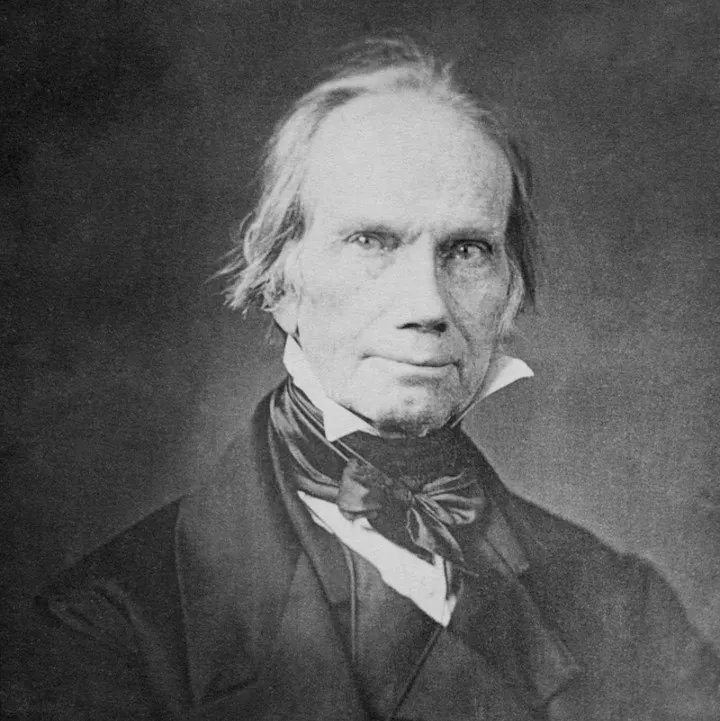 Photo: Henry Clay, via viewpointsradio.org
The lesson is not that Clay failed. It is that no individual — however skilled, however genuinely committed to the project of national cohesion — can substitute for the structural resolution of a structural conflict.
The Soldier as Blank Screen
America has a particular fondness for the military variant of the unity candidate, and the pattern here is especially illuminating. Dwight Eisenhower's 1952 candidacy is the template. Eisenhower was recruited by both parties — genuinely courted by Democratic operatives before he revealed himself to be a Republican — precisely because his identity as Supreme Allied Commander made him appear to exist above the partisan fray. He had no legislative record. He had no history of controversial votes. He was, in the most useful political sense, a surface onto which voters of very different persuasions could project their preferred version of American leadership.
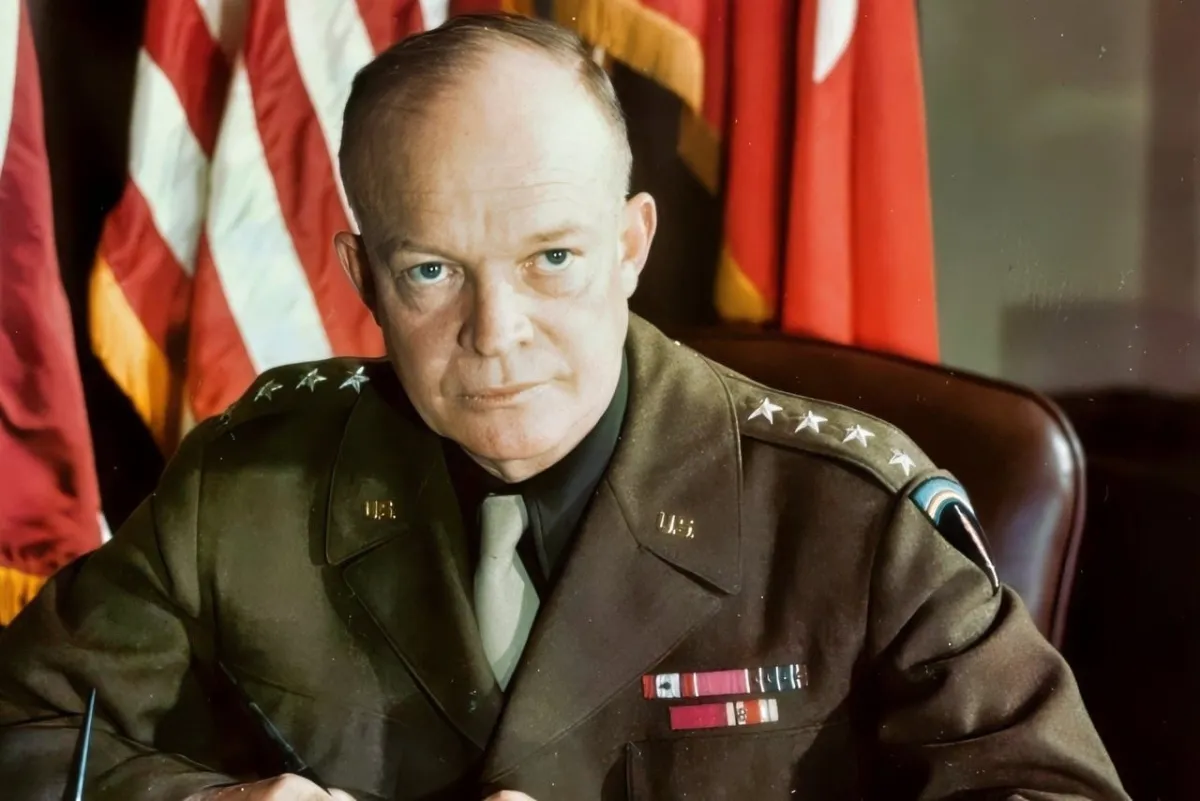 Photo: Dwight Eisenhower, via www.19fortyfive.com
Eisenhower was also a genuinely capable administrator who managed the postwar consensus with considerable skill. But his presidency did not resolve the divisions his candidacy promised to transcend. McCarthyism continued under his watch, in part because confronting it directly would have fractured the coalition that elected him. The civil rights movement accelerated toward its most confrontational phase during his two terms, and Eisenhower's responses were, by his own later admission, inadequate to the moment. The unity he embodied was real at the level of electoral symbolism and fragile at the level of actual governance.
Ulysses Grant's presidency, a generation earlier, illustrates what happens when the military unity candidate encounters a political environment that is actively hostile to the project. Grant won in 1868 on the explicit promise of national reconciliation after the Civil War — his campaign slogan, 'Let Us Have Peace,' remains one of the most direct expressions of the unity candidate's essential offer in American political history. His presidency descended into a series of corruption scandals, a contested Reconstruction policy that satisfied neither the freedmen it was meant to protect nor the Southern whites it was meant to reconcile, and a general atmosphere of factional warfare that his temperament and political inexperience left him poorly equipped to navigate.
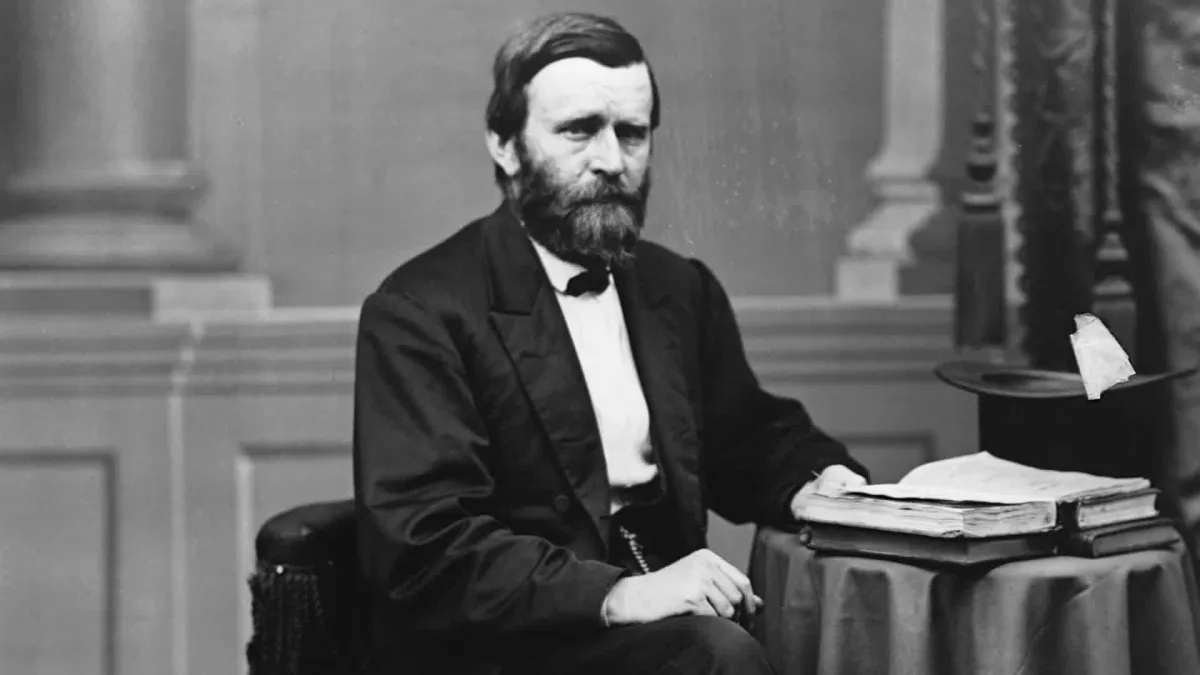 Photo: Ulysses Grant, via res.cloudinary.com
The Newcomer's Promise
The civilian variant of the unity candidate tends to emerge from governors' mansions or from outside the established political class entirely, and the pitch is slightly different: not the authority of military command but the freshness of uncorruption. The implicit argument is that the existing partisan machinery is itself the problem, and that someone who has not been fully absorbed by it retains the capacity to operate differently.
Ross Perot's 1992 campaign is perhaps the most revealing modern example because it was purely a unity candidacy stripped of any governing philosophy. Perot's appeal was almost entirely atmospheric — a straight-talking businessman who would apply common sense to problems that professional politicians had rendered artificially complicated. He drew nineteen percent of the popular vote, the strongest third-party performance since Theodore Roosevelt in 1912, which is itself a data point worth sitting with. Nearly one in five American voters, in a year when the Cold War had just ended and the economy was recovering, preferred a candidate whose primary qualification was that he was not a politician.
What that vote was actually expressing was not enthusiasm for Perot's specific proposals on the deficit or NAFTA. It was a protest against the frame itself — a refusal of the existing partisan binary that was dressed up as a preference for unity but was, more accurately, a symptom of fracture so deep that a significant portion of the electorate would rather vote for a man with no path to victory than choose between the available alternatives.
Barack Obama's 2008 candidacy operated in the same emotional register, with considerably more political sophistication. The 'there is no red America, there is no blue America' formulation from his 2004 convention speech became the foundation of an entire presidential campaign. Obama was genuinely talented, genuinely inspiring to a broad coalition, and his election represented a historic breach of one of America's most durable barriers. And yet, by the midpoint of his first term, the partisan polarization of Congress had reached levels that political scientists were struggling to find historical precedents for. The unity his candidacy promised did not materialize — not because Obama failed as a politician, but because the conditions that made the unity candidacy appealing in 2008 were structural, not personal, and no individual occupant of the Oval Office was going to alter them.
The Diagnosis the Symptom Reveals
The historical regularity of the unity candidate's emergence and failure points toward something that American political culture is persistently reluctant to acknowledge: unity has never actually been the country's natural condition. The Founders understood this clearly — Madison's entire framework in Federalist No. 10 is premised on the assumption that faction is permanent and that the system must be designed to manage it rather than eliminate it. The fantasy of a pre-partisan golden age when Americans were united is, like most golden ages, a retrospective construction.
What the recurring appearance of the unity candidate actually tells us is that the country is experiencing a level of fracture intense enough to generate the fantasy of its resolution. The figure arrives on schedule not because the cure is near but because the fever has spiked. And the fever, in American history, has a way of spiking before something breaks — or before something changes enough that the old fractures are replaced by new ones.
The long game here is not to find the right healer. It is to ask what the recurring need for one reveals about the patient.