The Neutral Party That Never Was: How Outside Legal Voices Became Inside Political Weapons
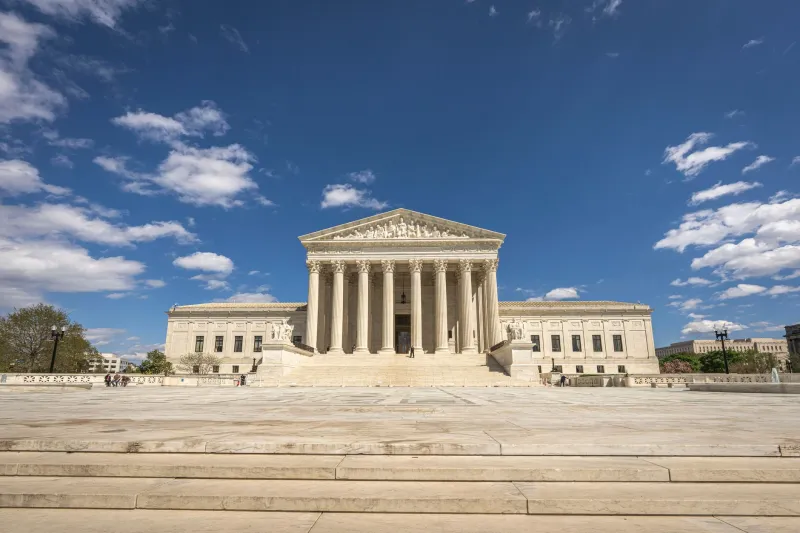
The phrase amicus curiae translates, with deceptive gentleness, as "friend of the court." The image it conjures is appropriately benign: a learned bystander, possessed of relevant expertise, volunteering disinterested guidance to judges grappling with a difficult question. The reality of the modern amicus brief, particularly at the Supreme Court level, is almost perfectly inverted. The friend is rarely disinterested. The guidance is rarely volunteered. And the expertise, while often genuine, is deployed in the service of conclusions that were determined before the research began.
This inversion did not happen suddenly, and it did not happen by accident. It happened through the same gradual process that converts every procedural opening into a strategic resource: patient actors with clear interests and long time horizons recognized an opportunity, developed the infrastructure to exploit it, and repeated the process until the exploitation became invisible through sheer familiarity.
The Original Design
The amicus brief in Anglo-American legal tradition is genuinely old — its roots traceable to English common law practice, where courts occasionally permitted third parties with relevant knowledge to submit observations. The premise was straightforward: courts are not omniscient, and a party with no direct stake in the outcome but with pertinent information might improve the quality of judicial reasoning.
This premise contains an assumption that the modern amicus industry has rendered almost quaint: that the third party would, in fact, have no direct stake in the outcome. The assumption made sense in an era when most cases turned on narrow factual or doctrinal questions where outside expertise was genuinely technical — a question of maritime custom, say, or the interpretation of a specialized commercial practice. It made considerably less sense once the Supreme Court began deciding questions whose answers would determine the regulatory environment for entire industries, the constitutional status of major political practices, or the legal framework governing hundreds of millions of people.
When the stakes are that large, the universe of genuinely disinterested observers contracts rapidly toward zero.
The Transformation
The modern amicus brief as a political instrument has a reasonably precise historical origin point: the mid-twentieth century, when the Supreme Court's expanding constitutional docket began attracting systematic outside attention from organized interests that had previously focused their energies on legislatures and executive agencies.
The NAACP Legal Defense Fund's strategic use of social science evidence in the litigation that culminated in Brown v. Board of Education — including the famous doll studies submitted as supporting research — demonstrated that courts could be influenced not merely by legal argument but by the broader evidentiary and intellectual context in which arguments were received. This was a revelation with consequences that extended far beyond the civil rights movement.
 Photo: NAACP Legal Defense Fund, via blog.givingassistant.org
If carefully curated outside evidence could help persuade a court to reach a particular conclusion, then the production and submission of such evidence was a form of advocacy — and advocacy, in American political culture, rapidly attracts professional infrastructure. By the 1970s and 1980s, the amicus brief had been recognized by conservative legal networks as a vehicle for building the intellectual scaffolding of a long-term judicial project. The founding of the Federalist Society, the expansion of conservative legal foundations, and the deliberate cultivation of a pipeline of sympathetic legal scholarship were all, in part, investments in the amicus ecosystem.
 Photo: Federalist Society, via static.politico.com
The left had developed analogous infrastructure somewhat earlier, through public interest law organizations and academic networks. What changed in the latter decades of the twentieth century was not the existence of ideologically motivated amicus filing — it was the scale, the sophistication, and the explicit strategic coordination of the practice.
The Anonymity Architecture
The amicus brief's most valuable political property is structural: it permits interests that would face immediate skepticism if they appeared in their own name to appear instead under the name of an organization whose title suggests academic neutrality, civic purpose, or professional expertise.
The taxonomy of modern amicus filers at the Supreme Court includes law professors, think tanks, trade associations, former government officials, religious organizations, and entities described as "concerned citizens" or "legal scholars." The names are often accurate as far as they go. A brief filed by a coalition of economics professors may indeed have been written by economics professors. What the name does not reveal is who funded the organization that commissioned the brief, who selected the professors, who determined the question they would address, or what relationship exists between the filing organization and the parties whose interests the brief advances.
This opacity is not illegal. Much of it is not even technically undisclosed — Supreme Court rules require amicus filers to identify whether a party's counsel authored the brief or whether a party contributed money toward its preparation. But the disclosure requirements have significant gaps, and the practical effect is that the funding relationships and strategic coordination behind many amicus filings remain invisible to the public and, frequently, to the justices themselves.
The political technology here is sophisticated precisely because it exploits the court's own procedural framework. The Supreme Court's willingness to receive amicus briefs — and, over time, to cite them in opinions — reflects a genuine institutional commitment to informed decision-making. The amicus industry's achievement is having converted that commitment into a vector for the factional pressure it was designed to mitigate.
The Volume Problem
One quantitative indicator of the transformation is simply the number of briefs filed. In the early twentieth century, amicus participation at the Supreme Court was relatively rare — a handful of briefs per term, submitted by genuinely disinterested government entities or professional organizations with specific relevant expertise. By the early twenty-first century, major cases were attracting dozens, sometimes more than a hundred, amicus submissions.
This volume has its own political logic. A brief submitted alongside eighty others carries the implicit suggestion of broad consensus — a convergence of independent expert opinion that happens to align with one party's position. Whether that convergence reflects genuine independent agreement or coordinated filing by a network of allied organizations is, again, largely invisible from the outside. The appearance of consensus is itself a form of argument, and the amicus ecosystem has become adept at manufacturing it.
The Founders' Fear, Institutionalized
James Madison's concern, articulated most clearly in Federalist No. 10, was that factional interests would find ways to capture governmental mechanisms and bend them toward private advantage. His proposed solution — a large republic in which factions would be numerous enough to check each other — has had mixed results in practice. What he did not fully anticipate was the degree to which factions would learn to operate not by capturing institutions directly but by colonizing the procedural spaces those institutions left open.
The amicus brief is a procedural space. It was left open because the court needed information and had no better mechanism for obtaining it from outside parties. The information it now receives is often genuine, often expert, and almost never disinterested. The friend of the court is, in the main, the friend of whoever funded the filing — wearing the borrowed credibility of legal scholarship and the borrowed neutrality of a third-party posture.
The judiciary was never fully insulated from political money. What the amicus industry accomplished, over a century of patient institutional learning, was to ensure that when political money arrived at the court's door, it came dressed in a robe.
The long game, as always, rewards those who understand which procedural doors were left unlocked — and who have the patience to wait for the right case to walk through them.