The Reward for Failure: Why American Intelligence Agencies Grow Largest After Their Worst Mistakes
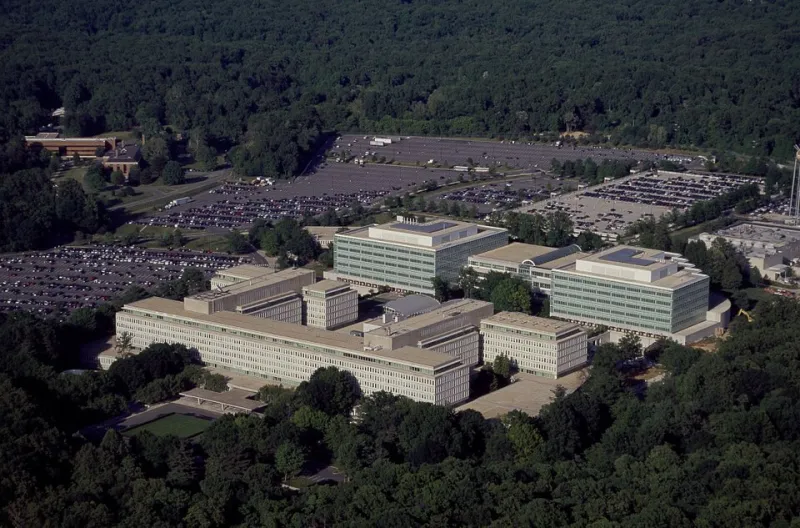
Photo: Carol M. Highsmith, Public domain, via Wikimedia Commons
There is a principle in organizational behavior, documented across industries and institutional types, that holds that the response to a visible failure is almost always expansion rather than contraction. When something goes catastrophically wrong, the instinct of the responsible institution — and of the oversight bodies nominally holding it accountable — is to demand more resources, more personnel, more authority, and more sophisticated tools. The implicit theory is that the failure resulted from insufficiency: not enough analysts, not enough surveillance capability, not enough coordination. The solution is therefore always more.
This logic has governed the development of the American intelligence community for the better part of a century. It has produced, through a series of disasters each followed by a round of furious reform, one of the largest and most expensive intelligence apparatuses in the history of human civilization. And it has done so through a mechanism that would strike any dispassionate observer as perverse: the agencies most directly implicated in each catastrophic failure have consistently emerged from the aftermath with more power, more money, and substantially less accountability than they possessed before the failure occurred.
Pearl Harbor and the First Expansion
The modern American intelligence community was not born from a vision of strategic foresight. It was born from catastrophe. The attack on Pearl Harbor in December 1941 exposed, in the most brutal possible terms, the consequences of fragmented, uncoordinated intelligence collection. Signals had been available. Warnings had been issued. The information existed, in dispersed form, across multiple agencies that did not share it, did not integrate it, and did not act on it.
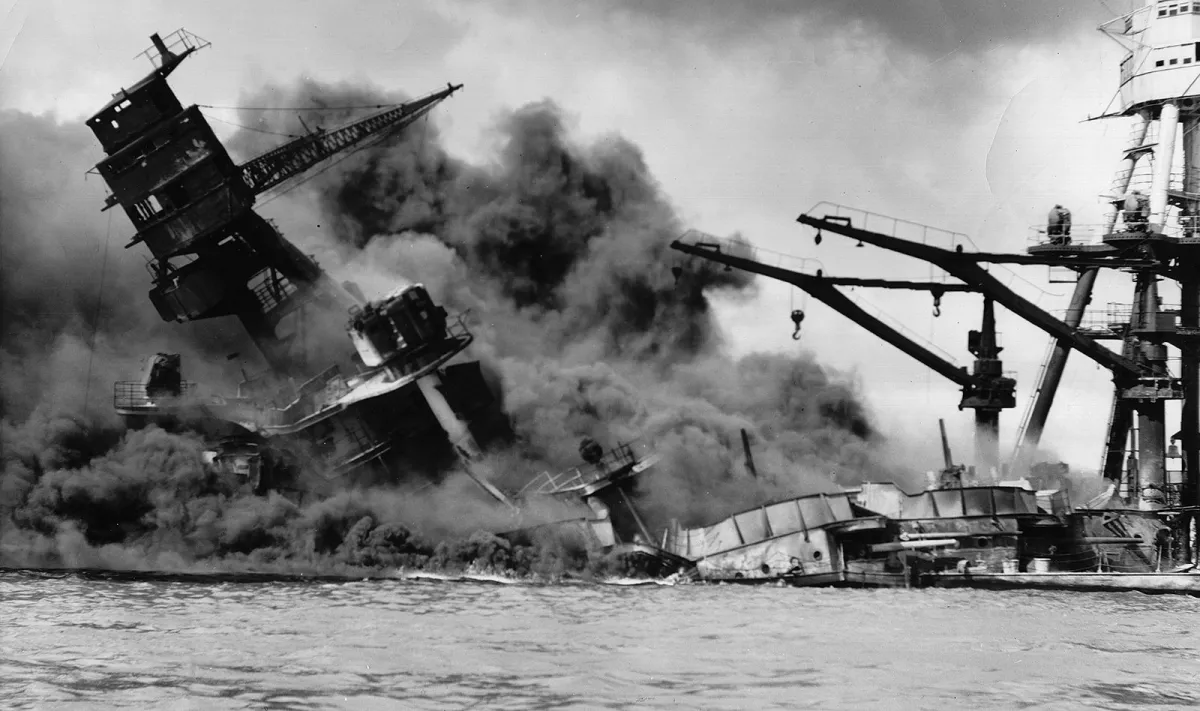 Photo: Pearl Harbor, via cdn.britannica.com
The institutional response followed the pattern that would repeat itself throughout the century. Congressional investigations produced outrage. Outrage produced reform legislation. Reform legislation produced new organizations — the Central Intelligence Agency, the National Security Council, the formal architecture of the postwar intelligence state — that were larger, better funded, and possessed of broader authorities than anything that had existed before the attack they were created to prevent from happening again.
 Photo: Central Intelligence Agency, via c8.alamy.com
The Office of Strategic Services, the wartime predecessor to the CIA, had itself been a product of earlier perceived deficiencies. The CIA that replaced it was larger. The community that grew around the CIA was larger still. Each institutional layer was added in response to a perceived gap, and each perceived gap was identified in the aftermath of a failure. The community grew, in other words, precisely because it had failed — and the growth was presented, with complete sincerity, as the remedy.
The Accountability Inversion
What makes this pattern historically significant is not that institutions seek to expand after failures. That impulse is ancient and well-documented. What is distinctive about the intelligence community's growth model is the specific mechanism by which expansion is justified: the argument that the failure itself demonstrated the need for more of what failed.
This is a genuinely unusual accountability structure. In most institutional contexts, failure produces contraction, personnel changes, and reduced authority. A corporation that misses its projections by a catastrophic margin does not typically receive a budget increase. A general whose strategy produces a decisive defeat is not typically given command of a larger army. The normal logic of accountability runs in one direction: failure leads to reduced resources and increased scrutiny.
In the intelligence community, the logic runs in the opposite direction with remarkable consistency. The Church Committee investigations of the mid-1970s, which exposed decades of illegal domestic surveillance, assassination plots, and systematic overreach, produced new oversight mechanisms — and also produced a community that remained, in its essential dimensions, intact. The post-9/11 reform process, triggered by the most catastrophic domestic intelligence failure in American history, produced the Director of National Intelligence, the Department of Homeland Security, the Transportation Security Administration, and a surveillance infrastructure of unprecedented scope. The 17 agencies that had failed to prevent the attacks became, within a few years, 18 agencies with significantly larger budgets and substantially expanded legal authorities.
 Photo: Church Committee, via i.ytimg.com
The pattern is not conspiracy. It is psychology, operating through institutional incentives that are entirely legible once examined.
Why Failure Expands Rather Than Contracts
The mechanism is worth understanding in some detail, because it is not accidental. When an intelligence failure becomes public, it creates an immediate political demand for action. The demand is not, at its core, a demand for accountability in the punitive sense — it is a demand for reassurance. The public and its elected representatives want to believe that the failure was anomalous, that it has been identified and understood, and that the corrective measures taken will prevent recurrence.
Reassurance is most easily provided through visible action. Visible action most naturally takes the form of new organizations, new authorities, new budgets, and new oversight structures. The creation of new infrastructure signals seriousness. It produces press releases, confirmation hearings, and organizational charts — tangible evidence that something has been done. The alternative — a genuine reckoning with the analytical and institutional failures that produced the miss, followed by targeted reductions in authority and budget — is less visible, less dramatic, and far more politically difficult to execute.
There is also a more structural dynamic at work. The classified nature of intelligence operations means that the officials best positioned to explain what went wrong, and what is needed to prevent recurrence, are the officials who ran the agencies that failed. Congressional oversight committees, operating with limited access to operational details, are substantially dependent on agency leadership to define both the problem and the solution. This is not a new observation — it was documented extensively in the Church Committee era — but its implications have never been fully absorbed into the reform process.
The Technology Dimension
The post-Cold War period introduced a new variable into this historical pattern: the accelerating pace of technological change. Each generation of surveillance and collection technology has created new capability gaps that have served, in the aftermath of failures, as justifications for additional investment. The argument that the intelligence community lacks the technical tools to perform its mission has been available, in some form, in every decade since 1947 — and it has never been falsified, because the technology frontier always moves faster than any agency's capacity to reach it.
The post-9/11 expansion of signals intelligence, the development of mass data collection programs, the integration of commercial data sources into intelligence analysis — each of these represented a genuine technological response to genuine operational gaps. Each also represented a substantial expansion of state capacity that, once built, proved essentially impossible to dismantle. The tools created to address the failures of 2001 were still operating, in expanded form, when the next generation of failures arrived to justify the next round of expansion.
The Long Game
The historical record does not suggest that American intelligence agencies are uniquely dishonest or uniquely self-serving. It suggests that they operate within an incentive structure that makes expansion the path of least resistance after every failure, and that the oversight mechanisms designed to constrain that expansion have been consistently outpaced by the institutional momentum they were meant to check.
Five thousand years of recorded history offer no example of a security apparatus that voluntarily contracted in the aftermath of a visible threat, however that threat was eventually resolved. The human appetite for protection, once activated by a real catastrophe, does not calibrate neatly to the actual level of residual risk. It demands reassurance, and reassurance costs money. The agencies that provide it have learned, through long institutional experience, that the most reliable way to grow is to fail conspicuously — and then to be the only available source of the remedy.